


Best Vintage Radio Speaker Cloth for Restorations

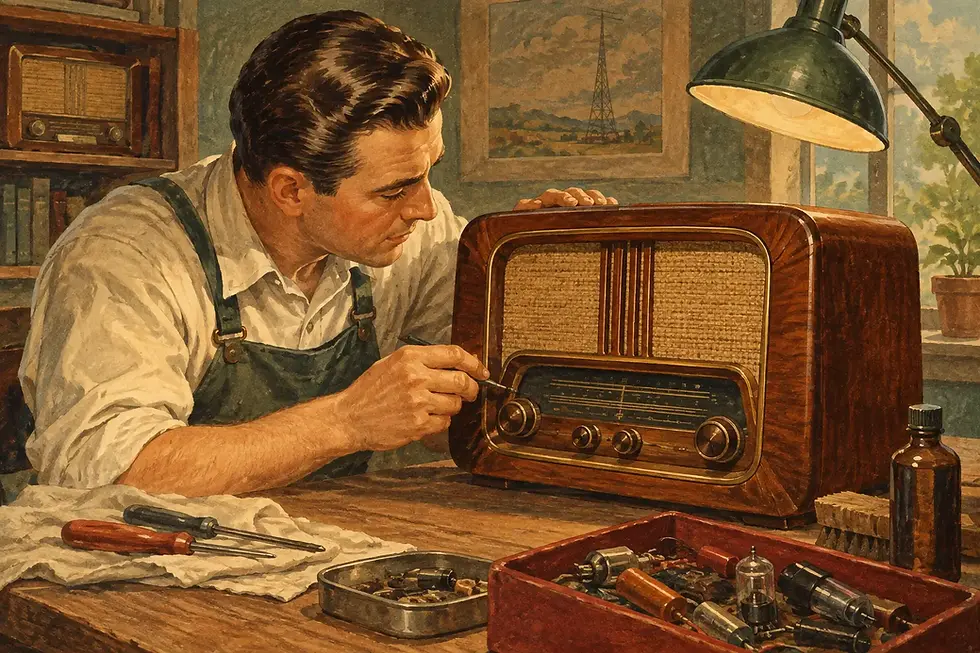
A radio can be electronically sound, cabinet-finished, and beautifully aligned, yet still feel unfinished when the grille cloth is wrong. The best vintage radio speaker cloth does more than cover a speaker opening. It restores the face of the set - the part the owner sees first, and the material that quietly shapes how an original cabinet presents its sound.
For a family console that once stood in a living room, or a cathedral radio rescued from an estate, cloth selection deserves the same care as tube testing, capacitor replacement, and veneer repair. The right material respects the radio’s period, supports clear sound, and lets the cabinet regain its intended character without looking artificially new.
What Makes the Best Vintage Radio Speaker Cloth?
There is no single fabric that belongs on every antique radio. A 1930s tombstone with a bold vertical grille calls for a different treatment than a 1940s wood tabletop radio, a postwar Bakelite set, or a large console with multiple speaker openings. The best choice is the one that suits the radio’s era, cabinet design, original evidence, and acoustic needs.
Start with the weave. Speaker cloth must be open enough for sound to pass through freely. A material that looks handsome on a worktable but has a dense backing or tightly packed fibers can dull high frequencies and make a freshly restored radio sound closed-in. This matters especially on sets whose original speaker and output stage already have a warm, limited-frequency character. The cloth should not add another unnecessary layer of restriction.
Color and pattern matter just as much. Vintage radio cloth was rarely chosen at random by manufacturers. Some designs used restrained gold, tan, brown, or charcoal weaves to complement walnut cabinetry. Others used decorative patterns, metallic threads, geometric motifs, or rich contrasting colors that gave an Art Deco cabinet its visual identity. A cloth that is too bright, too uniform, or too contemporary can make an otherwise authentic restoration look immediately out of place.
Texture is the final part of the equation. Period-appropriate cloth often has visible depth: slubs, crosshatching, ribbing, or a subtle irregularity that suits old wood and aged finishes. Modern synthetic fabric can be practical, but a glossy surface or overly perfect texture may clash with the craftsmanship of an 80-year-old cabinet.
Match the Cloth to the Radio’s Era
The cabinet should lead the decision. Before removing old material, examine it closely in natural light. Even deteriorated cloth may reveal its original pattern at the edges, under retaining strips, or behind the speaker board. Take photographs before disassembly and save a small section if possible. That fragment can provide more useful guidance than a catalog description.
1920s and early 1930s sets
Early battery radios, breadboard sets with speaker cabinets, and first-generation AC radios often look best with conservative, furniture-like textiles. Brown, tan, and dark neutral weaves tend to sit naturally alongside early wood finishes. The goal is usually restraint rather than decoration. A modern patterned fabric may draw attention away from the simple, architectural character of these sets.
Mid-1930s cathedral, tombstone, and Art Deco radios
This is where pattern becomes more important. Many cathedral and tombstone radios used cloth as an intentional design element, particularly behind arched or cutout grilles. Art Deco sets may call for geometric patterns, warm metallic accents, or bolder contrast. Still, the pattern should work at the scale of the grille. A design that is too large can disappear behind narrow wooden bars, while one that is too busy can make the cabinet appear cluttered.
1940s and postwar tabletop radios
Wartime and postwar radios often favor practical, understated cloth. Look for colors that support the cabinet rather than compete with it. A deep brown, muted gold, gray-brown, or softly patterned tan can be more convincing than a flashy reproduction. On painted Bakelite, Plaskon, or Catalin cabinets, the cloth often serves as a calm visual counterweight to the cabinet’s stronger color.
Console radios and vintage hi-fi cabinets
Large consoles need special attention because they have broad fabric areas and often contain more than one speaker. The cloth must look balanced across the full opening, particularly when a pattern repeats. A small mismatch that would be unnoticed on a tabletop radio can become obvious on a console. Consider the direction of the weave and whether the pattern should be centered on the speaker board before anything is cut.
Acoustic Openness Is Not a Minor Detail
A radio speaker was voiced with its original grille treatment in place. That does not mean every replacement must be an exact laboratory match, but it does mean the fabric should be selected with sound in mind.
A quick visual test is helpful: hold the cloth up to a light source. You should see a consistent amount of light through the weave. Then place it loosely in front of a playing speaker. If the sound becomes noticeably muffled, especially in speech and upper-range music, the fabric may be too dense. This simple test cannot replace careful listening after installation, but it can prevent an unsuitable material from becoming a permanent choice.
Avoid fabrics with heavy foam backing, thick upholstery linings, or coatings designed for drapery and furniture. Those materials can restrict airflow and may age poorly under the warmth produced by tube equipment. Likewise, do not assume that a fabric marketed as speaker cloth is automatically right for an antique radio. Some modern audio grille fabrics are acoustically open but visually too thin, black, or synthetic for a period cabinet.
Reproduction Cloth Versus the Original Fragment
When original cloth is present, preservation should be considered before replacement. If it is dirty but structurally stable, gentle surface cleaning may be preferable to removing a scarce original material. If it is torn, brittle, deeply stained, or has shrunk beyond repair, replacement may be the more responsible path.
An original fragment is still valuable after replacement. Store it in an envelope with notes about the radio model, cabinet, and date of restoration. Future caretakers may appreciate the reference, and it keeps part of the set’s history with the radio.
Reproduction cloth is often the most practical choice, particularly for radios with missing or severely damaged material. The aim is not to make the cabinet appear untouched. It is to make a thoughtful, reversible restoration choice that feels right for the object. In some cases, a close period-style weave is better than an incorrect attempt at an exact pattern.
Fit and Installation Can Make or Break the Result
Even an excellent cloth can look wrong if it is stretched unevenly or installed without regard to pattern alignment. Speaker boards vary widely in construction. Some use tacks, staples, glue, retaining strips, or metal clips. Work slowly and document the original method before removing anything.
Cut the replacement with generous excess around the perimeter. Position the cloth face-down on a clean surface, place the speaker board on it, and check the pattern from the front before fastening. If there is a stripe, diamond, or geometric motif, establish a centerline first. It is far easier to correct alignment before the first staple or tack goes in.
Tension should be firm but not severe. Overstretching can distort a pattern, pull open the weave, or cause the cloth to sag differently over time. On a large console board, alternate sides as you fasten, much as you would tighten a drumhead. This helps keep the fabric square without creating ripples.
Be cautious with adhesives. Permanent glue can soak through delicate cloth, discolor fibers, and make future restoration difficult. Where the original construction allows it, mechanical fastening is usually more reversible and respectful of the radio’s long service life.
A Few Details Collectors Notice
The best restorations consider the details that are easy to overlook. The cloth should cover the opening fully without interfering with dial cords, knobs, pushbuttons, or chassis ventilation. It should sit naturally behind decorative grille bars rather than pressing hard against them. If the set has a separate wooden or metal trim piece, reinstall it only after confirming that the new material lies flat.
Also consider the cabinet as a whole. Fresh cloth can make aged lacquer, faded toner, or chipped paint appear more worn than it did before. That is not necessarily a reason to refinish the cabinet. Often, a sympathetic cloth choice with muted color and period texture helps the new work blend with honest age rather than calling attention to itself.
At Regal Sound Design, we view grille cloth as part of the radio’s voice and its history. Whether the set is a cherished household heirloom or a rare collector piece, the material should support the craftsmanship already there.
The right cloth will not demand attention for itself. It will let the cabinet, dial, and warm sound of the restored radio feel whole again - much like the set has simply been given the chance to speak in its own voice.


👍The author has put so much heart into this work. Only true passion could drive such thorough and in-depth research.