


Art Deco Radio Restoration That Respects History

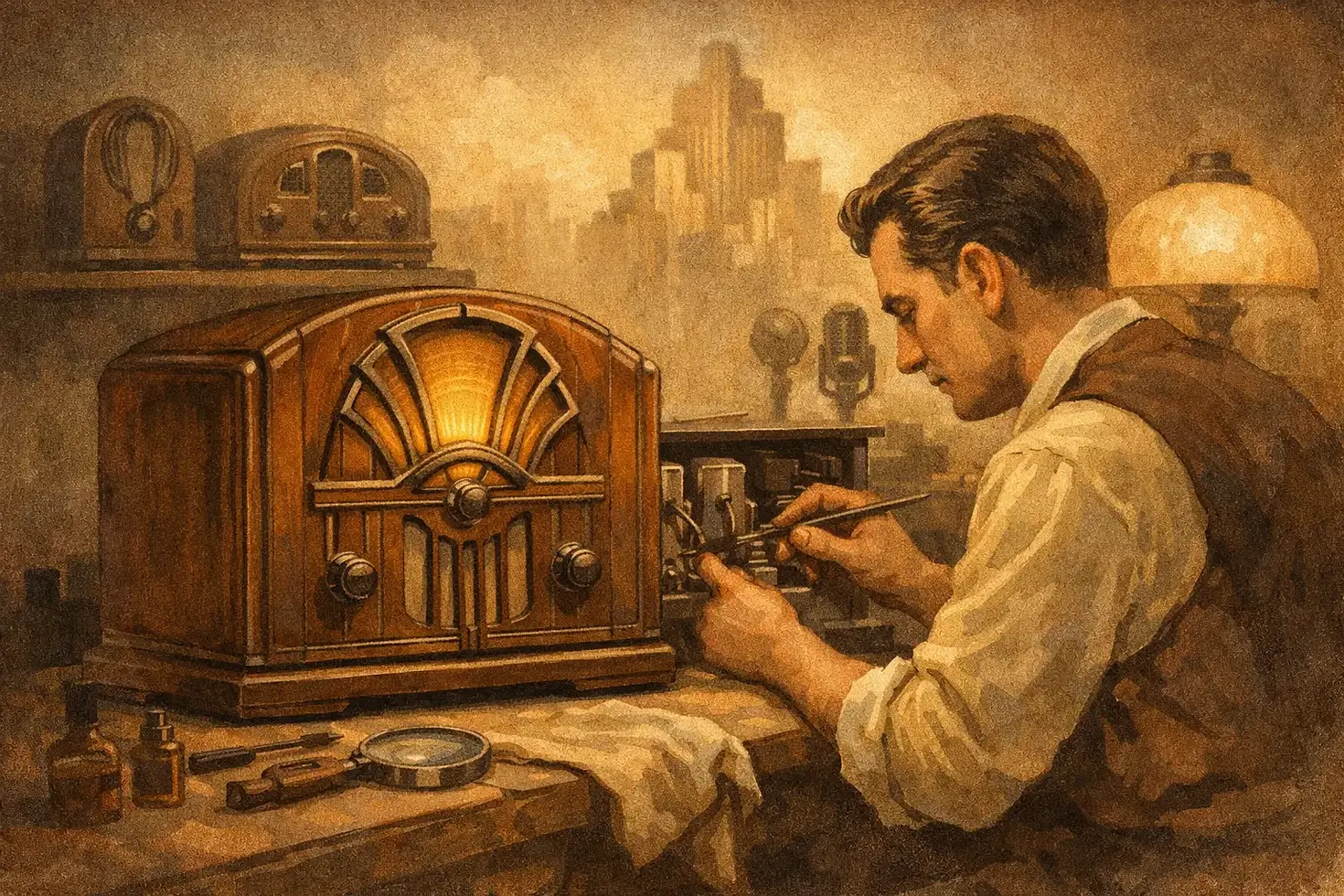
A stepped cabinet, waterfall grille, chrome accent, or glowing dial can make an Art Deco radio feel like a small piece of architecture from another age. Art deco radio restoration is about more than getting that radio to turn on again. It is the careful work of preserving the visual character that drew you to it while rebuilding the electrical foundation needed for safe, reliable listening.
For many owners, these radios carry a family story. Others were discovered at an estate sale, in an attic, or on a shelf at an antique market. Whatever its path, an Art Deco set deserves to be treated as both a historical object and a tube-era audio instrument.
Why Art Deco Radios Need Specialized Care
Art Deco radios were built during a period of rapid change in consumer electronics. Sets from the 1930s and early 1940s often combined ambitious cabinet styling with circuitry that was advanced for its day but is now many decades beyond its intended service life. Veneered wood cabinets, painted finishes, Bakelite, Plaskon, chrome trim, cloth grilles, push buttons, and dial assemblies may all be present on a single radio.
That combination makes generic repair a poor fit. A technician can make a radio produce sound while accidentally damaging the very details that give it collector value. Harsh cleaning compounds can dull or craze plastic. Incorrect polishing can remove aged finish or lettering. A cabinet refinished without restraint may look new, but no longer look like the radio it was meant to be.
The electronics require the same judgment. Capacitors, wiring insulation, resistors, rectifiers, tubes, controls, and power components age differently. Some parts must be replaced for safety and dependable operation. Others may be retained when they remain stable and appropriate to the restoration goal. The right approach depends on the radio's condition, rarity, intended use, and the owner's priorities.
The First Rule: Do Not Simply Plug It In
A radio that has been silent for decades can look harmless, especially if its cord and cabinet appear intact. That appearance can be misleading. Original capacitors may have deteriorated internally, wiring can become brittle, and a failing power component can place stress on parts that are difficult or expensive to replace.
Powering up an unrestored set may cause overheating, damage transformers, burn resistors, or create a shock hazard. A radio that plays briefly is not necessarily a healthy radio. Hum, fading volume, distortion, crackling controls, weak reception, or a hot smell are signs that the set needs attention, not proof that it is ready for regular use.
A proper assessment begins before full power is applied. The chassis is inspected for prior repairs, missing parts, corrosion, damaged wiring, evidence of overheating, and incorrect tube types. This early examination often tells the restorer whether the radio is a straightforward service candidate or a more involved preservation project.
What a Thoughtful Art Deco Radio Restoration Includes
The goal is not to make every radio look factory-new. The goal is to return it to honest, dependable condition while retaining the features that make it original.
Stabilizing the Chassis
Electronic restoration commonly begins with the parts most likely to affect safety and performance. Aging paper and electrolytic capacitors are typically addressed because their failure can produce hum, poor sound, unstable operation, and damage elsewhere in the circuit. Worn resistors, deteriorated wiring, faulty switches, and weak connections are evaluated as well.
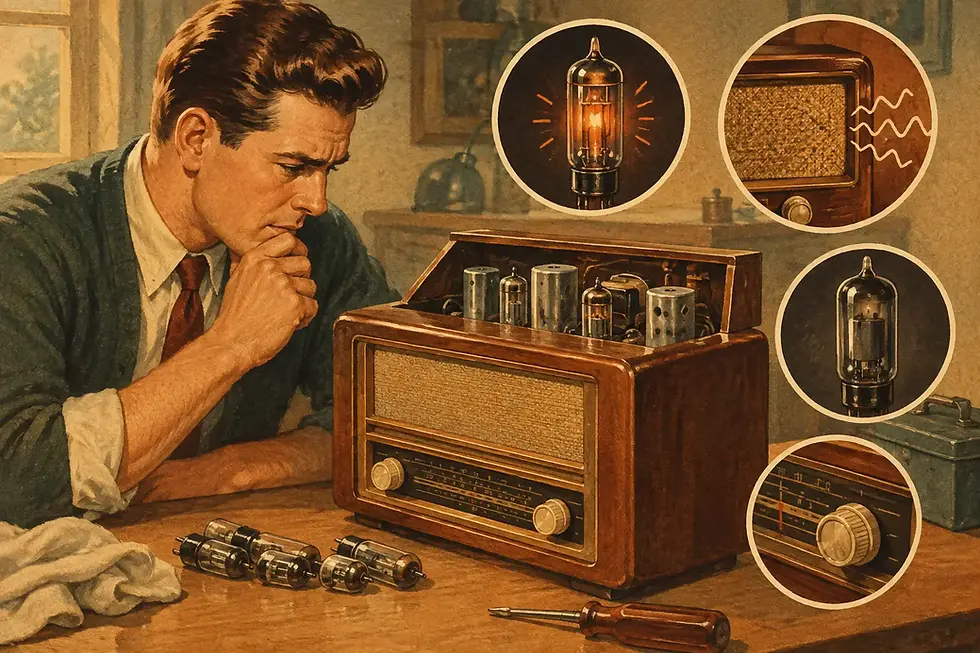
Tube testing is part of the process, but tubes should not be replaced automatically. A tested, functioning original tube may be preferable to a random substitute. When replacement is necessary, correct electrical specifications and proper operation matter more than simply finding a tube that fits the socket.
The power supply deserves particular care. A healthy transformer, properly serviced rectifier circuit, and safe line connection support every other section of the radio. Depending on the design, a restorer may also recommend a safer power cord arrangement or other discreet safety improvements. Such choices should be explained clearly, particularly when originality and everyday use need to be balanced.
Restoring Reception and Sound
Once the chassis is electrically sound, attention turns to performance. Controls are cleaned and serviced where appropriate, intermittent connections are corrected, and the radio's alignment is checked. Alignment is the precise adjustment that helps the tuner receive stations accurately and perform as the manufacturer intended.
A clear dial pointer and strong reception are satisfying, but sound quality matters just as much. Original speakers can often be preserved, though brittle cones, damaged voice coils, or failing field coils may require repair or replacement. The right answer depends on the speaker's condition and the importance of keeping original components intact.
Vintage radio sound is not modern hi-fi, nor should it be judged by that standard. A well-restored Art Deco set should offer the warmth, presence, and character that made radio listening a centerpiece of the home. It should also operate without the intrusive hum, sputtering, and instability that aging components can bring.
Preserving the Cabinet and Its Details
Cabinet work should begin with restraint. Dust, surface grime, loose trim, scratches, finish wear, and grille cloth condition all need to be evaluated before any cosmetic decision is made. Sometimes careful cleaning and stabilization are enough. In other cases, veneer repair, finish touch-up, grille cloth replacement, or structural cabinet work may be justified.
Original finish has value because it records the radio's life. A few signs of age may be more desirable than an overly glossy surface that erases its history. On the other hand, severe moisture damage, peeling veneer, or failed finish can make sensitive restoration the better choice. There is no single rule for every cabinet.
Dial scales, escutcheons, station labels, knobs, and push buttons require special attention. These details are easily lost, cracked, faded, or replaced with incorrect parts over the years. A correct knob or carefully retained dial marking often contributes more to authenticity than an aggressive cosmetic overhaul.
Originality, Safety, and Daily Use
Every restoration involves decisions. A collector planning to display a rare radio may prefer minimal intervention and maximum retention of original materials. An owner who wants to listen to a beloved family console every weekend may reasonably prioritize dependable operation and electrical safety.
Neither approach is automatically better. What matters is that the work fits the radio and its purpose. Preservation-minded restoration makes those choices visible rather than treating the cabinet and chassis as interchangeable parts.
For radios with sentimental value, documentation can be especially meaningful. Notes about the model, condition before service, replaced components, and any cabinet work create a useful record for the next generation. A restored radio becomes easier to care for when its history is kept with it.
Questions to Ask Before Sending a Radio for Service
Before choosing a restoration specialist, ask whether the work will address both electrical reliability and the preservation of original appearance. Ask how safety concerns will be handled, whether the radio will be aligned after repair, and how cosmetic work will be approached. Clear answers are a good sign that the technician understands the difference between a quick repair and a careful restoration.
It also helps to discuss your plans for the radio. Will it be displayed, played occasionally, or used often? Is its family history more important than a flawless finish? Are you comfortable with discreet replacement parts where needed for safe operation? These conversations guide the work and prevent surprises.
At Regal Sound Design, antique radios are approached with respect for both their circuitry and their story. An Art Deco radio is not just a handsome cabinet from the past. It is a surviving voice from an era when families gathered around a dial to hear music, news, and distant stations arrive through the air.
If one has been waiting quietly in your home, resist the temptation to test its luck with a wall outlet. Give it the patient attention it has earned. With careful restoration, its illuminated dial and warm tube sound can become part of your home again, carrying its history forward rather than leaving it behind.


Comments