


Tube Radio Safety Guide for Collectors and Families

A radio that has been silent for decades can be one of the most tempting finds in a home, estate, or antique shop. Before that first switch is turned, this tube radio safety guide offers a more important reminder: a vintage radio is both a cherished artifact and an electrical device built to standards very different from those of today.
The glow of dial lamps and tubes can bring back a family kitchen, a childhood living room, or the evening broadcasts a grandparent once enjoyed. But an unserviced set can carry shock, fire, and damage risks even when it appears clean and complete. Patience is part of good preservation. The safest first step is often to leave the radio unplugged until its condition has been properly assessed.
Tube Radio Safety Guide: What Makes Old Sets Different
Most tube radios were made when household wiring, insulation materials, and electrical safety practices were not what they are now. Components age whether a radio is played every day or stored quietly in an attic. Rubber-coated wire can become brittle, power cords can crack, and capacitors can fail internally after many decades of service.
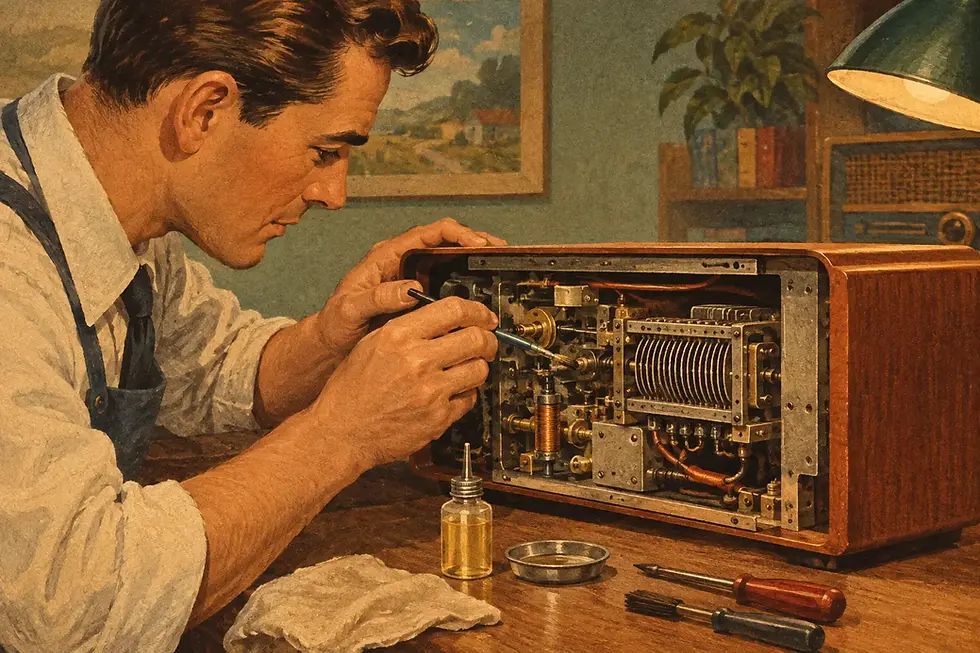
A capacitor is especially important to understand. These components can store electrical energy, sometimes even after a radio has been unplugged. A person does not need to touch a glowing tube to be injured. Contact with the wrong point beneath a chassis can be dangerous, which is why opening a set is not a casual way to investigate a problem.
Many compact radios from the 1930s through the 1960s are transformerless AC/DC designs, often called "hot chassis" sets. Depending on the plug orientation, portions of the chassis or internal metalwork may be connected in a hazardous way to household current. A plastic cabinet does not make the electronics safe, and a radio that plays normally is not proof that it is electrically sound.
Large console radios and higher-fidelity receivers often use power transformers, but they have their own risks. Their circuitry can include high voltages, substantial heat, and aging parts that may fail without warning. The presence of a transformer changes the design. It does not remove the need for qualified service.
Never Plug In an Unknown Radio Just to See What Happens
The phrase "it worked when I found it" has led to many damaged radios. When old electrolytic capacitors have dried out or deteriorated, applying full household power can cause overheating, smoke, transformer damage, or a loud component failure. In a rare radio, that moment can turn a straightforward restoration into a far more involved preservation project.
Avoid the familiar test of plugging in a set for a few seconds to see whether tubes light up. Also avoid repeatedly switching it on and off in hopes that it will "wake up." Age-related electrical faults do not improve with exercise.
Instead, inspect the exterior without opening the cabinet. Look for a frayed cord, missing plug blade, taped repairs, scorch marks, loose knobs, a cracked cabinet around mounting points, or a strong odor of burnt insulation. If the radio has a battery compartment, check for old batteries and corrosion, but do not force stuck parts or scrape aggressively around fragile contacts.
If a radio has been exposed to water, kept in a damp basement, or stored in a rodent-infested building, treat it with additional caution. Moisture can corrode connections and compromise insulation. Rodent nesting materials can be flammable, and droppings should be handled carefully rather than disturbed indoors.
Handle the Cabinet as Carefully as the Electronics
A vintage radio is not only a chassis. Its cabinet, dial glass, grille cloth, finish, and labels are part of its history. These details are easily damaged by well-meaning cleaning or moving.
Before lifting a console, make sure the back panel, chassis, and speaker are secure. Console cabinets can be deceptively heavy, and the chassis may shift if its mounting hardware has loosened. Use two people for large sets, lift from the cabinet structure rather than the knobs or dial area, and keep the radio upright whenever possible.
For tabletop radios, support the bottom with both hands. Do not carry a radio by its handle unless that handle has been inspected and is known to be structurally sound. Catalin, Plaskon, Bakelite, and early plastics can crack under stress. Veneer cabinets may separate at the corners when exposed to sudden changes in humidity or temperature.
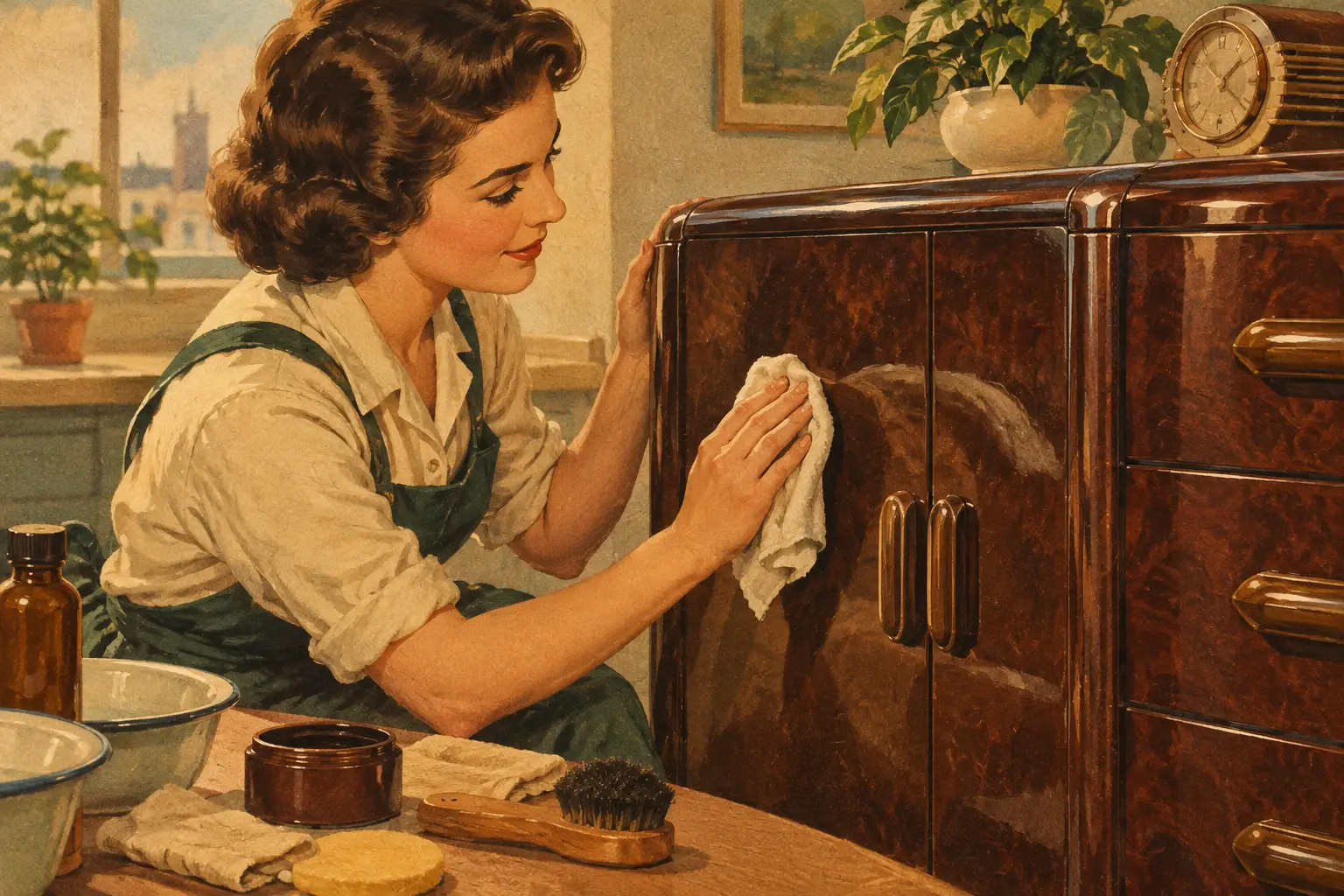
Dust can usually be addressed gently with a soft, dry brush or cloth on the exterior. Avoid spraying cleaners directly onto a cabinet, dial scale, or grille cloth. Alcohol, window cleaner, furniture polish, and household solvents can cloud plastic, lift painted dial markings, stain fabric, or remove an original finish. Preservation usually favors the least aggressive method that will do the job.
Provide a Safe Place for Display and Storage
Where a radio sits matters almost as much as how it is handled. Keep it away from radiators, direct sun, damp floors, open windows, and areas where pets or children may pull on its cord. A stable indoor environment is kinder to wood, plastic, adhesives, paper labels, and electronic parts alike.
Do not stack heavy objects on a console lid or use a radio cabinet as a plant stand. Water rings, spilled soil, and trapped moisture can leave lasting damage. If you are storing a set, choose a dry, conditioned area rather than a garage, shed, or attic with extreme seasonal temperatures.
A radio that has been restored and approved for operation also needs breathing room. Tube equipment produces heat by design. Keep ventilation openings clear, avoid enclosing a playing radio in a tight cabinet, and never drape fabric over it. If you notice an unusual smell, smoke, crackling, fading audio, or excessive heat, switch it off, unplug it by the plug rather than the cord, and allow it to cool.
Know When a Professional Evaluation Is the Safer Choice
There is a satisfying tradition of hands-on radio collecting, and many experienced hobbyists have developed careful bench practices. Yet there is an equally important tradition of knowing when a family heirloom deserves specialist attention.
Professional evaluation is especially wise when a radio has not been powered in years, has an original cloth-covered cord, shows evidence of heat or moisture damage, contains loose parts, or has sentimental or collector value. It is also the prudent choice for transformerless sets, console radios, early battery sets, and tube amplifiers or receivers with exposed chassis access.
A preservation-minded restoration considers more than whether sound returns. The technician examines safety-related parts, evaluates wiring and power supply components, checks operation over time, and seeks to retain the radio's character wherever practical. Sometimes that means preserving an original appearance while replacing failure-prone components beneath the chassis. Sometimes it means recommending limited conservation rather than a full cosmetic refinish. The right approach depends on the radio's design, condition, rarity, and the owner's goals.
Ask a restorer how they handle original components, cabinet finishes, dial materials, and replacement power cords. A thoughtful answer should recognize that a 1940s tabletop radio, a cathedral set from the 1930s, and a mid-century tube receiver should not all be treated as identical repair jobs.
A Few Habits That Protect People and History
Once a radio has been professionally restored for regular use, treat it as vintage electrical equipment rather than an unattended modern appliance. Operate it on a stable surface, use the correct type of replacement fuse if one is specified, and unplug it during long absences or electrical storms. Do not let anyone reach behind the set while it is powered, particularly around an open back or exposed terminals.
Keep its service records with the radio. A small note documenting when it was restored, what work was completed, and any operating recommendations can be valuable to future family members or collectors. It also helps preserve the story of the object, not just its circuitry.
At Regal Sound Design, we believe the finest restoration begins with respect: respect for the voltage inside the chassis, respect for the craftsmanship in the cabinet, and respect for the memories connected to the sound. Let a vintage radio earn its return to the room slowly and safely, so the next warm glow from its dial feels like a piece of history welcomed home.

Comments