


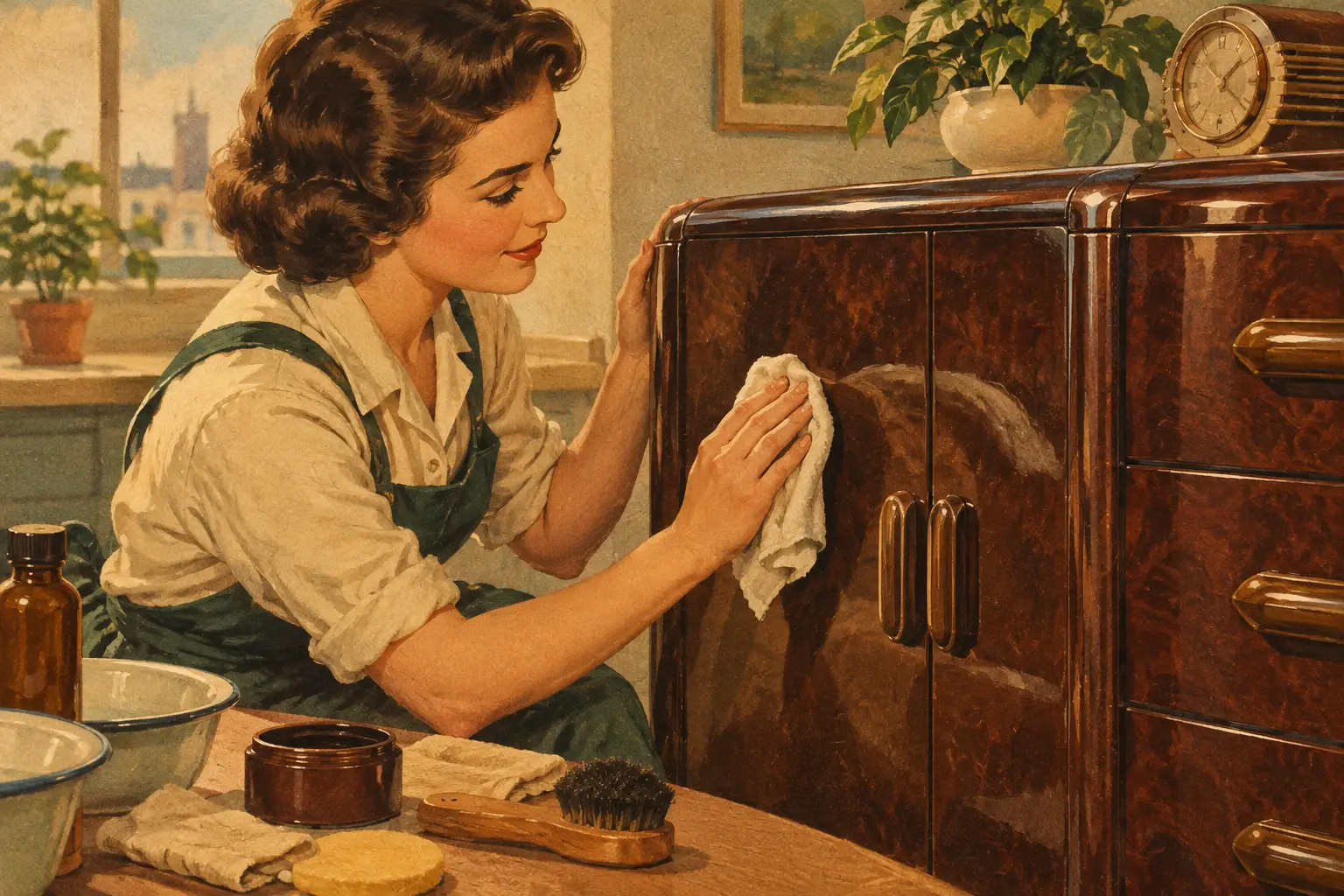
How to Restore Bakelite Cabinets with Care

A Bakelite radio cabinet can look beyond saving when it arrives coated in nicotine film, kitchen grease, paint specks, or decades of dull oxidation. Yet beneath that grime may be the deep brown, black, marbled, or mottled finish that gave a 1930s or 1940s set its character. To restore Bakelite cabinets well, the goal is not to make them look newly manufactured. It is to bring back their intended appearance while preserving the evidence of a long life.
For collectors and families alike, that distinction matters. A small patch of honest wear may belong to the radio's story. A harsh cleaner, aggressive sanding, or a rushed crack repair can remove more history than it restores.
Begin by Identifying What You Have
Bakelite is an early phenolic resin, commonly used for radio cabinets, knobs, switches, and electrical components from the 1920s through the postwar years. It is hard, heat-resistant, and substantial in the hand, but it can become brittle with age. Many cabinets sold as Bakelite are actually Plaskon, Catalin, or another early plastic, and each material responds differently to cleaning and polishing.
A true Bakelite cabinet is often dark brown, black, or nearly opaque, sometimes with subtle swirls. Plaskon is frequently lighter and more ivory-like. Catalin is usually more vividly colored and can oxidize at the surface, changing from its original yellow, red, green, or marbled color. If there is any uncertainty, treat the cabinet conservatively. The wrong polishing compound can leave an irreversible haze or remove a colored surface layer.
Before touching the finish, photograph the cabinet from every side. Record existing cracks, chips, missing feet, decals, grille cloth placement, dial trim, and screw locations. This is especially valuable if the cabinet will be separated from the chassis for electrical restoration.
Safely Prepare a Bakelite Radio Cabinet
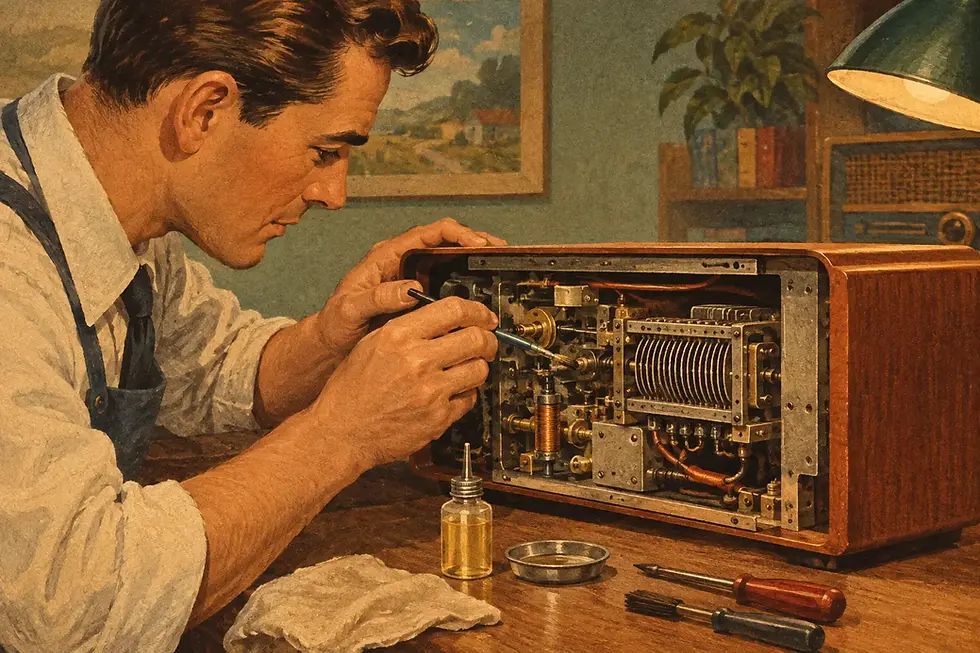
Never clean a cabinet around a powered chassis. Tube radios can retain dangerous voltages even after they have been unplugged. If you are not experienced with vintage electronics, leave chassis removal and electrical service to a qualified restoration specialist.
Once the chassis, dial glass, speaker, knobs, and metal trim are safely removed or protected, start with dry cleaning. A soft natural-bristle brush and low-suction vacuum can lift loose dust from grille openings, corners, and molded details. Avoid forcing dust deeper into the speaker cloth or scratching the cabinet with a stiff brush.
The first wet-cleaning step should be modest: a soft cloth lightly dampened with warm water and a small amount of mild dish soap. Work in a small area, then immediately wipe it dry. The cloth should be damp, not dripping. Water can enter seams, lift old labels, stain cardboard back panels, and cause trouble around metal inserts.
Nicotine and oily household residue often need several gentle passes rather than one powerful solvent. Patience is part of preservation. If a cleaner begins to pull color onto the cloth, leave the area alone and reassess before continuing.
What to Keep Away From Old Bakelite
Strong solvents and abrasive household products are not shortcuts. Acetone, lacquer thinner, alcohol-heavy cleaners, ammonia, bleach, and oven cleaner can damage early plastics or strip applied color from a cabinet. Steel wool, scouring pads, and coarse sandpaper create scratches that polishing may not fully remove.
Some old radio cabinets were painted at the factory, particularly those with decorative highlights, faux wood effects, or contrasting trim. If a finish looks painted rather than molded through the material, assume it is original until proven otherwise. Cleaning it as though it were bare Bakelite can erase it quickly.
How to Restore Bakelite Cabinets Without Over-Polishing
After surface soil is removed, examine the cabinet under indirect daylight. What appears to be a dull finish may simply be a thin remaining film of dirt. What appears to be discoloration may be normal aging, uneven exposure to sunlight, or an old repair. This is the point where restraint makes the difference between a sympathetic restoration and an over-restored cabinet.
For sound Bakelite with light haze or fine scratches, use a mild plastic polish designed for delicate hard plastics. Apply a small amount to a soft cotton or microfiber cloth, working in short, controlled sections. Use light pressure. Buff with a separate clean cloth and inspect the result before moving to the next area.
The objective is clarity and an even low-to-medium sheen, not a mirror finish. A high-gloss surface can look out of place on a radio that originally had a softer molded luster. It may also emphasize small waves, scratches, and repairs that were less visible before polishing.
Deep scratches deserve particular caution. Sanding can level a scratch, but it also changes the surrounding surface and may expose filler, disturb a molded texture, or flatten lettering. On a scarce cabinet, it is often better to reduce the visibility of a scratch than to pursue complete removal.
Wax is optional, and it should be used sparingly. A thin coat of a non-abrasive, clear museum-style wax can add a gentle protective sheen after cleaning and polishing. Heavy wax buildup, however, collects dust in grille patterns and makes later repairs more difficult. If the cabinet already looks correct after polishing, it does not need another product simply because one is available.
Cracks, Chips, and Missing Pieces Need a Different Approach
A hairline crack in a Bakelite cabinet is not automatically a reason to fill it. First determine whether the crack is stable. If the cabinet flexes, the crack spreads, or a mounting point is pulling apart, it needs structural attention before cosmetic work.
Repairs are often most secure when reinforced from the inside, where they are less visible. The adhesive must be chosen for the specific plastic and the nature of the break. A repair that is too rigid can fail beside the original crack. One that is too flexible may not support the cabinet. Excess glue on the visible surface can be far harder to correct than the original damage.
Chips present a judgment call. A small loss at the rear bottom edge may be best left alone, especially if it does not affect fit or stability. A prominent chip near a dial opening, grille, or front corner may justify careful filling and color matching. Matching old Bakelite is difficult because its color can vary through the molding and has usually changed with age. A repair that looks perfect in one light can look conspicuous in another.
Never use a quick household patch as a final repair on a valuable set. Thick epoxy blobs, putty, and glossy paint can lower collector appeal and complicate future conservation. When a cabinet is rare, heavily damaged, or especially sentimental, professional assessment is the wiser investment.
Do Not Forget the Details That Frame the Cabinet
The cabinet is only one part of the radio's visual presence. Knobs, escutcheons, dial glass, pushbuttons, grille cloth, and station-call decals all deserve separate treatment. Knobs may be Bakelite themselves, but they are often dirtier than the cabinet because of years of handling. Clean them individually so residue does not migrate into the shaft openings.
Dial scales require an especially light touch. Printed markings can disappear with a single pass of the wrong cleaner. Use a barely damp soft cloth around the glass or plastic, avoiding printed surfaces unless their stability is known. Original grille cloth may be fragile, faded, or brittle. Replacing it can refresh a cabinet dramatically, but retaining sound original cloth is usually preferable when it remains presentable.
When reassembling, do not overtighten chassis screws. Old Bakelite can crack around mounting holes under pressure. Check that the chassis sits naturally, the dial aligns correctly, and the knobs clear the cabinet face without rubbing.
Preserve the Cabinet and the Radio Together
A beautifully cleaned cabinet paired with an unsafe chassis is still not a radio ready for daily use. Original capacitors, deteriorated wiring, weak tubes, and aging power components can affect sound quality and safety. Conversely, a fully rebuilt chassis deserves a cabinet that has been treated with equal respect.
At Regal Sound Design, restoration is approached as both technical repair and careful stewardship. A tabletop Bakelite radio may be a collector's prize, a flea-market rescue, or the set that once sat in a grandparent's kitchen. Its value is not measured only by the shine of its cabinet or the strength of its reception.
Give the cabinet the gentlest treatment that achieves the result it needs. When the warm luster returns and the radio is once again safe to hear, the remaining signs of age will not look like flaws. They will look like proof that this small piece of history was worth keeping.


Comments