


A Water Damaged Radio Case Study From the 1940s

A radio does not need to be submerged for water to cause lasting trouble. A basement flood, leaking roof, burst pipe, or even years of humid storage can leave damage that remains hidden until power is applied. This water damaged radio case study follows the restoration approach for a 1940s tabletop tube radio that arrived after a minor flood - an example of why patience and careful assessment matter as much as technical repair.
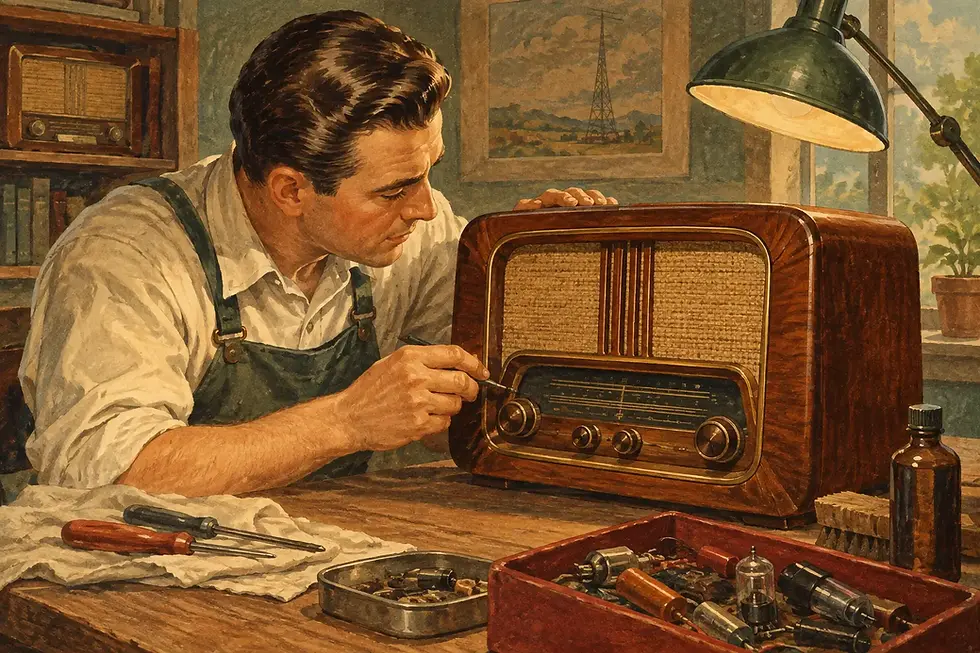
The cabinet had dried by the time it reached the workbench, but the radio still carried the unmistakable signs of exposure: a faint musty odor, water staining at the lower veneer, corrosion around the chassis hardware, and a cloth-covered power cord that no longer belonged in service. Its owner had inherited the set from a grandparent and remembered it playing baseball broadcasts in the family kitchen. The goal was not to make it look newly manufactured. It was to preserve its honest age while returning it to safe, dependable operation.
Water Damaged Radio Case Study: The First Rule
The first rule with a wet or water-exposed antique radio is simple: do not plug it in. That remains true even if the cabinet feels dry and the radio appears intact.
Vintage tube radios contain transformers, capacitors, wiring insulation, coils, switches, and paper-based components that can retain moisture or suffer corrosion long after the visible water has disappeared. Applying power too soon can damage parts that might otherwise be saved. It can also create a shock or fire hazard.
In this case, the owner had wisely left the radio unplugged. That decision likely prevented additional damage. The chassis was removed from the cabinet, photographed, and examined before any cleaning or electrical testing began. Documentation is especially valuable with antique sets because it records original component placement, dial-cord routing, labels, and the small details that give a radio its historical character.
Separating Cosmetic Damage From Electrical Damage
Water affects a radio in more than one way. The cabinet tells one story, while the chassis often tells another.
The walnut veneer on this 1940s set had darkened near the base, and one lower corner had begun to lift slightly. The finish was dull but largely present. Aggressive refinishing would have erased the gentle wear accumulated over decades, so the cabinet work focused on stabilization, careful cleaning, and modest finish preservation. The loose veneer was re-secured, the cabinet was allowed additional time to equalize in a controlled environment, and the original surface was revived rather than stripped away.
Inside, the concerns were more serious. The steel chassis showed light surface rust around mounting points and the underside held residue left behind by dirty water. Several tube pins had oxidized. The speaker field assembly and output transformer needed close inspection because moisture in magnetic components can lead to insulation failure or corrosion that is not obvious from the outside.
Not every water-damaged radio requires the same level of intervention. A set exposed briefly to clean water may need drying, cleaning, and a thorough electrical rebuild. A radio that sat in floodwater, especially contaminated water, may have compromised wood, rusted coils, damaged speaker paper, and insulation failures throughout. The extent of recovery depends on how long the radio was wet, what kind of water reached it, and whether someone attempted to operate it afterward.
Drying Is a Process, Not a Quick Fix
A hair dryer, oven, or direct blast of heat is not the answer for an antique radio. Rapid heat can warp veneer, loosen old glue joints, crack finishes, and stress fragile components. It may also push moisture deeper into areas where it is harder to detect.
The radio in this case was dried gradually in a low-humidity, temperature-controlled space. The chassis, speaker, tubes, cabinet, knobs, and back cover were kept separate during this period. This allowed each material to dry at its own pace and made it easier to inspect concealed areas behind the dial scale, under transformer covers, and within the cabinet base.
Time is often an essential repair tool. A radio that appears dry after a few days may still hold moisture beneath coil windings, inside transformer laminations, or in the layers of a wooden cabinet. Rushing the next step can turn a recoverable radio into a more expensive and complicated project.
Rebuilding the Chassis for Safe Operation
Once the chassis was stable and clean, the electrical restoration could begin. The original paper and electrolytic capacitors had aged beyond their safe service life, as they commonly do in tube radios from this era. Water exposure made replacement even more necessary. These components are central to reliable filtering, signal coupling, and safe power supply operation.
The restoration retained the original layout wherever practical while replacing failed or unreliable parts with appropriate modern components. A deteriorated power cord was replaced with a safe new cord, and the power switch, tube sockets, controls, and band switch were cleaned and evaluated. Resistors were checked for drift, wiring insulation was inspected, and corroded connections were addressed one by one.
The dial mechanism required particular care. Water residue had stiffened the tuning assembly, and the dial cord was beginning to fray. A radio can be electrically healthy but frustrating to use if the tuning system slips or binds. The mechanism was cleaned, lubricated only where appropriate, and restrung so the pointer again traveled smoothly across the original dial scale.
The speaker presented a favorable surprise. Its cone showed no major water staining or softening, and its voice coil moved freely. Rather than replacing an original speaker that still performed properly, it was carefully cleaned and retained. Preservation means replacing what has failed, not replacing history without cause.
The Moment of First Power
A restored water-damaged radio should not go from bench work directly to a wall outlet. The first power-up is controlled and deliberate. Voltage is brought up gradually while the technician watches current draw, checks for overheating, and listens for signs that the power supply and audio stages are behaving as they should.
For this radio, the first controlled test produced a soft hum that quickly revealed a final issue in the audio section. After correction and alignment, the set began receiving local stations with the warm, full sound its owner remembered. The dial lamp glowed behind the original scale, and the tuning control settled into stations without slipping.
That moment is more than a technical milestone. A working vintage radio brings back the physical experience that a digital stream cannot duplicate: the gentle resistance of the knob, the glow of the dial, the pause between stations, and the voice or music emerging from components built generations ago.
What Owners Should Do After Water Exposure
If an antique radio has been exposed to water, resist the urge to test it. Unplug it if it is connected, remove batteries if applicable, and avoid disassembling delicate components unless you have experience with vintage electronics. Do not spray the chassis with household cleaners or apply heavy oils to controls and mechanisms.
Instead, move the radio to a dry indoor area with stable temperatures. If it was exposed to contaminated floodwater, handle it carefully and avoid bringing it into a living space until it can be assessed. Photograph the radio from all sides, including its underside if accessible, because those images can help document its condition before restoration begins.
A specialist can determine whether the radio is a sensible candidate for restoration and what level of preservation is appropriate. For a rare Catalin set, a family console, a cathedral radio, or a modest tabletop receiver with a meaningful history, the answer is rarely the same. The best course depends on the radio's condition, originality, rarity, and the owner's hopes for it.
Water damage can feel like the end of a treasured radio's story. Often, it is not. With restraint, sound electrical judgment, and respect for the original workmanship, a silent set can still return to the room with its history intact and its voice restored.


Comments