


Radio Collecting: Build a Collection With a Story

A walnut console that once stood in a family living room, a small Bakelite tabletop set found at an estate sale, or a glowing cathedral radio heard late at night can be far more than an old appliance. Radio collecting is the pleasure of preserving objects that carried news, music, voices, and family routines into American homes for generations.
The best collections are rarely built by buying the most expensive sets as quickly as possible. They grow through curiosity, careful selection, and a respect for the fact that every radio is both a piece of engineering and a witness to its time. Whether you are drawn to the cabinet craftsmanship of the 1930s, the color and form of postwar plastics, or the warm sound of tube equipment, a thoughtful approach makes the hobby more rewarding.
Why Radio Collecting Still Matters
A vintage radio asks more of its owner than a decorative object on a shelf. Its cabinet may reflect furniture trends of its era, while its chassis reveals the practical ingenuity of early broadcast technology. Even a modest five-tube tabletop receiver can tell a story through its dial design, station markings, manufacturer label, and the repairs made during its long working life.
For many collectors, the connection is personal. A radio may resemble one remembered from a grandparent's kitchen or recreate the warm amber glow of a childhood den. For others, the appeal is technical: tubes, transformers, capacitors, and carefully tuned circuits offer a direct relationship with sound that modern electronics seldom reveal.
Collecting also preserves objects that are becoming harder to find in honest, unaltered condition. A radio does not have to be rare to deserve care. A common set with a beautiful cabinet, an intact dial, and a family history can be more meaningful than a scarce model bought only for its price guide value.
Choose a Direction for Your Radio Collection
The word “radio” covers a remarkably broad field. A collector who tries to acquire everything can soon run out of room, time, and restoration funds. Beginning with a focus gives a collection character and makes each purchase easier to evaluate.
Some collectors follow a particular period, such as early 1920s breadboard and battery sets, Depression-era cathedral radios, Art Deco tabletops, or mid-century consoles. Others collect by material, seeking Catalin, Plaskon, Bakelite, painted metal, or finely veneered wood. A third approach centers on a manufacturer, a cabinet style, or a technical category such as communications receivers, farm radios, or tube hi-fi components.
Let space and use shape your choices
A console radio can be a magnificent centerpiece, but it requires floor space, careful moving, and a realistic plan for restoration. Tabletop radios are often easier to display and can make an excellent starting point, particularly for collectors learning how cabinet condition and chassis originality affect value.
If listening is as important to you as display, prioritize sets with serviceable parts availability and a chassis appropriate for regular use after professional restoration. If your primary interest is industrial design, you may be comfortable with a nonworking display piece, provided it is honestly represented and protected from further deterioration.
Neither choice is wrong. The key is to know whether you are collecting objects to admire, equipment to hear, or a combination of both.
What to Look for Before You Buy
A radio can look wonderful from across a room while hiding serious damage. Conversely, a dusty set with a dull finish may be structurally sound and capable of becoming a fine example with sympathetic work. Slow inspection is one of the most valuable skills a collector can develop.
Start with the cabinet. Look for loose veneer, water staining, missing trim, serious cracks, insect damage, and evidence of aggressive refinishing. Original finishes commonly show gentle wear, and that patina can be preferable to a glossy modern coating that erases the radio's age and character. On plastic radios, inspect for stress cracks, warping, repaired breaks, and discoloration.
Then consider completeness. Original knobs, pushbuttons, dial glass, grille cloth, back panels, escutcheons, and station call letters often matter a great deal. Reproduction parts can sometimes improve appearance, but an original and complete example usually carries greater historical integrity.
When possible, inspect the chassis without treating it as a casual test bench. A radio that “lights up” is not necessarily safe to operate. Aging capacitors, deteriorated wiring, incorrect fuses, damaged power cords, and prior amateur repairs can create risk for both the set and its owner.
A practical buying inspection includes these four questions:
Is the cabinet fundamentally sound, even if it needs cleaning or careful cosmetic work?
Are the visible parts original, present, and appropriate for the model?
Has the chassis been altered, corroded, or poorly repaired?
Is the asking price reasonable once restoration, transport, and replacement parts are considered?
Photographs are useful, but they cannot always reveal odors from moisture damage, hidden veneer lifting, or the condition of wiring beneath the chassis. When buying remotely, ask for clear images of the back, underside, labels, dial, cabinet corners, and any known damage. A candid seller who describes flaws is often more valuable than one who simply says a radio is “untested.”
Restoration Should Preserve More Than Appearance
The finest restoration respects both safety and authenticity. That does not mean leaving dangerous original components in place simply because they are old. It means making necessary electrical repairs with an understanding of how the radio was built, how it should perform, and what original details should remain visible and protected.
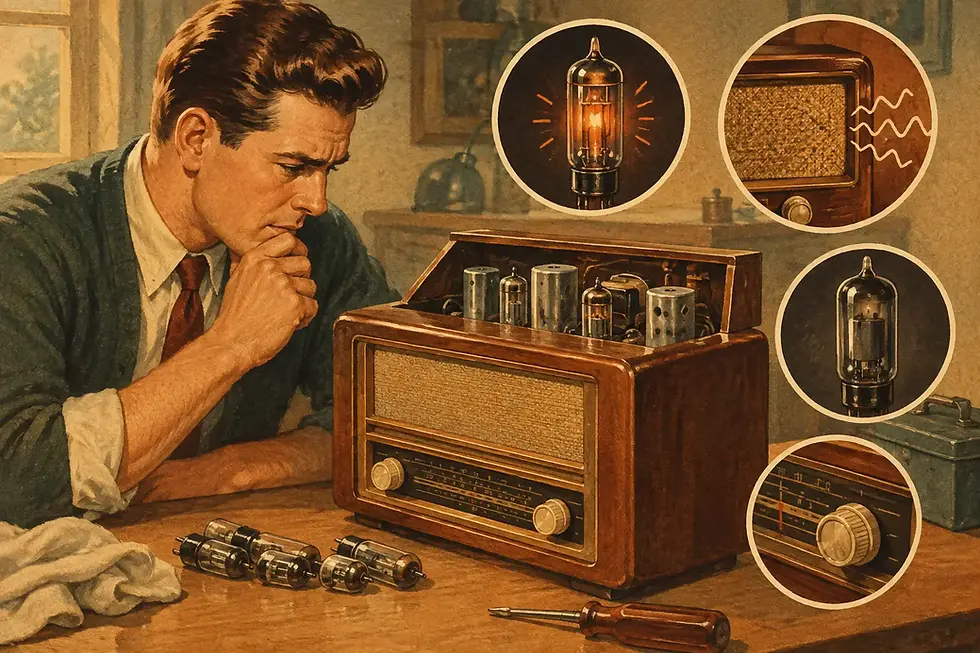
For a tube radio intended to play, electrical restoration commonly involves replacing failed or unreliable capacitors, addressing worn resistors, inspecting tubes, servicing controls, checking alignment, and fitting a safe power cord where appropriate. The precise work depends on the set. A battery radio, an AC/DC tabletop radio, and a large console receiver each present different technical and safety considerations.
Cabinet work deserves the same restraint. Cleaning, stabilizing loose veneer, repairing damaged structure, and reviving an aged finish can preserve a radio's honest appearance. Stripping and refinishing may be appropriate in cases of severe damage, but it should not be the automatic answer. Once an original finish, decal, or toned edge is removed, it cannot be put back.
This is where a specialist matters. Antique radios contain high voltages, fragile components, and construction methods unfamiliar to many general repair shops. A preservation-minded restoration practice understands that a repaired radio should not merely turn on. It should retain the details that make it worth keeping.
Caring for a Collection at Home
Where and how a radio is displayed has a direct effect on its condition. Keep sets away from direct sunlight, damp basements, extreme attic temperatures, and heat sources. Sunlight can fade finishes and plastics, while humidity encourages corrosion, mold, veneer failure, and swelling in wooden cabinets.
Use clean hands when handling polished wood, painted finishes, and plastic cabinets. Lift a radio from its cabinet base rather than by the dial, handle, grille, or knobs. Large consoles should be moved with help and protected from bumps that can split old joints or loosen delicate trim.
Dust gently with a soft brush or dry microfiber cloth. Avoid household sprays, silicone polishes, and strong cleaners unless you are certain they are safe for the material involved. A product that gives a quick shine can leave residue, damage an old finish, or make future conservation more difficult.
If a restored radio will be played, give it sensible operating time rather than leaving it on unattended for hours. Warm tubes are normal, but unusual smells, smoke, loud hum, crackling, or a suddenly dim dial are reasons to turn the set off and have it evaluated. Vintage electronics reward patience, not force.
Build a Collection You Will Want to Keep
Price guides and rarity charts have their place, but they should not dictate every purchase. The radio that makes you stop at a flea market table may be valuable because of its design, its sound, or its connection to a particular person and place. Those are legitimate reasons to collect.
Keep simple records as your collection grows. Note the model number, serial number, purchase date, source, condition, restoration work, and any family history that came with the piece. Photographs taken before and after service can become part of the radio's story. This record is useful for insurance and future care, but it also keeps the human history from being separated from the object.
A well-chosen radio collection does not need to be large. A few sets that have been carefully selected, respectfully restored, and properly maintained can fill a home with more character than a room crowded with unfinished projects. Give each radio the care its history deserves, and it may continue carrying the sounds and memories of its era for many years to come.


Comments