


Why Vintage Hi-Fi Still Deserves Careful Restoration

A receiver that has sat silent in a cabinet for forty years can still hold the character that made its owner keep it. The warm glow of dial lamps, the weighted feel of a tuning knob, and the first notes through a tube amplifier are not details modern equipment can simply reproduce. Vintage hi-fi is more than old stereo equipment. It is a record of an era when audio components were built to be serviced, admired, and kept for decades.
For many owners, that equipment is also personal. It may be the console that played records at family gatherings, a grandfather's tabletop radio, or a flea-market find with a beautiful cabinet and a promising chassis. Restoring it properly means respecting both sides of its value: the sound it can still make and the history it carries.
What Makes Vintage Hi-Fi Different
Tube-era audio equipment was designed around components that age in distinct ways. Capacitors dry out, resistors drift from their original values, tube sockets oxidize, and old wiring insulation can become brittle. A unit may power on and still be unsafe or incapable of performing as its designer intended.
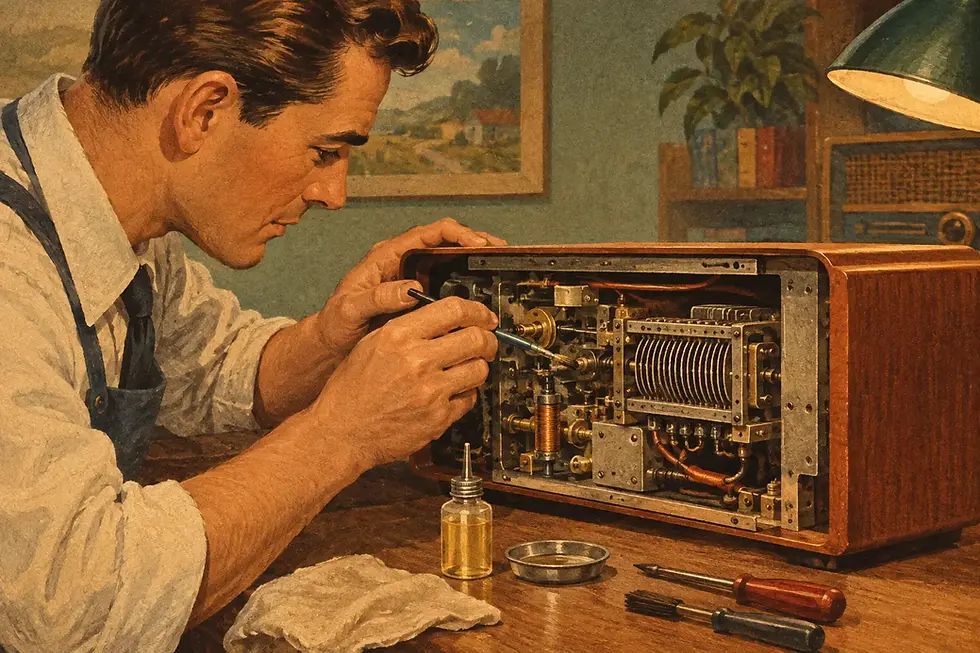
This is why a quick repair is rarely the whole answer. Replacing one visibly failed part may bring sound back temporarily, but it does not address the condition of the rest of the circuit. A careful evaluation considers the power supply, amplification stages, controls, switches, alignment, grounding, and the condition of transformers and speakers. Each section affects reliability as well as sound quality.
Vintage hi-fi also varies greatly by period and design. A 1930s radio, a postwar AM-FM console, a 1950s tube tuner, and a 1960s integrated amplifier may all use tubes, yet they require different knowledge and restoration decisions. Even two models from the same manufacturer can have meaningful circuit and component differences. General electronics experience is useful, but it is not a substitute for familiarity with tube-era equipment.
Restoration Is Not the Same as Replacement
The best restoration work starts with a simple question: what should this piece become? For most owners, the answer is not a museum object that cannot be used, nor a heavily modified component stripped of its period character. The goal is usually safe, dependable operation while preserving the qualities that made the equipment worth saving.
That balance matters. Certain aging capacitors should be replaced because they can compromise performance, damage other components, or create a safety risk. Worn power cords, failing rectifiers, unstable controls, and deteriorated wiring may also need attention. At the same time, original transformers, speakers, knobs, dial assemblies, cabinet finishes, and other historically meaningful parts deserve careful preservation whenever practical.
A thoughtful technician does not treat every original part as sacred, and does not discard original material without reason. The right approach depends on the component, the condition of the equipment, and how the owner intends to use it. A daily-listening amplifier requires a different level of reliability planning than a rare radio destined for a collection display.
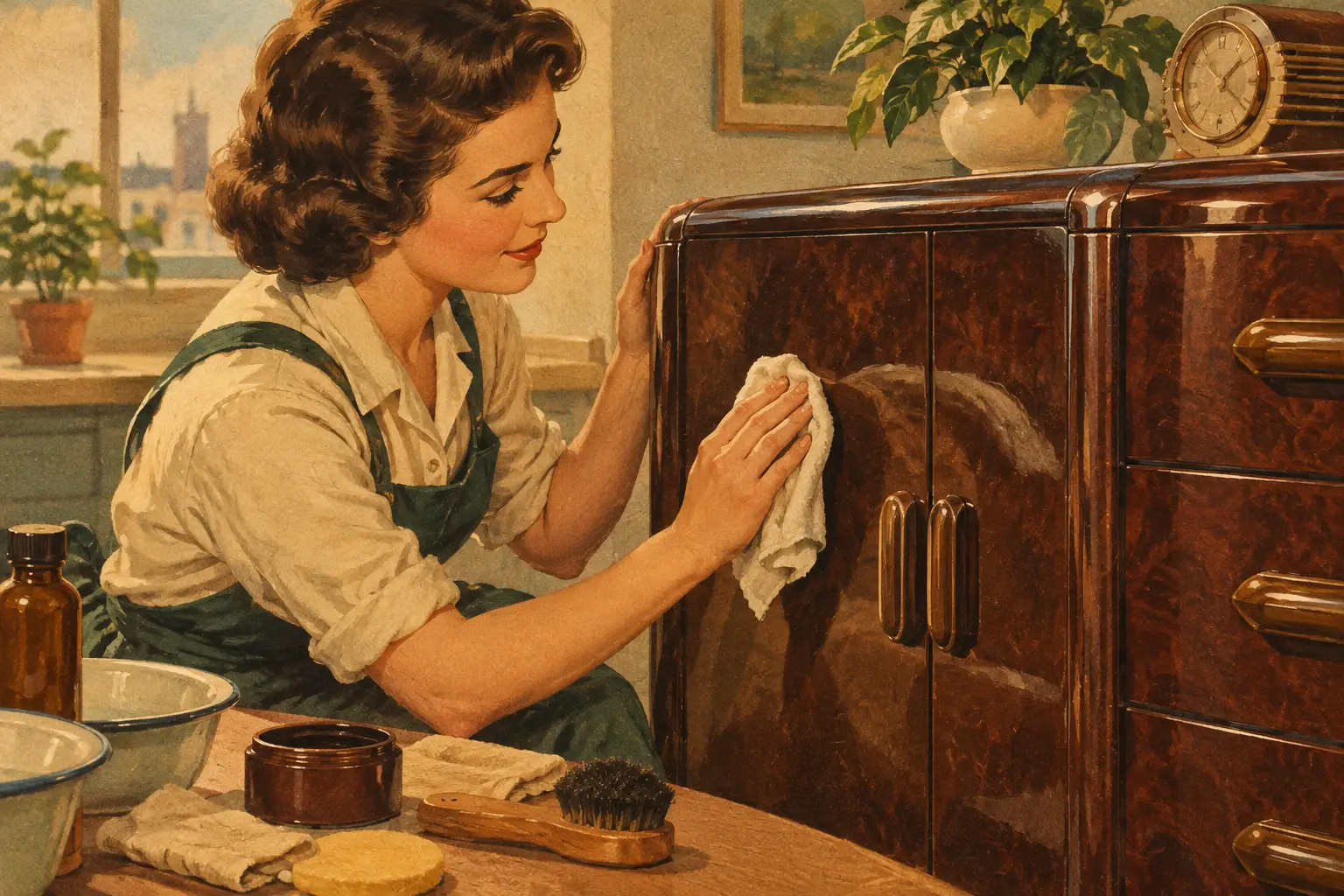
Cosmetic work calls for the same restraint. A cabinet with modest wear may tell an honest story of use. Over-refinishing, incorrect grille cloth, or bright new hardware can erase the visual identity that drew an owner to the piece in the first place. Preservation is often about knowing what not to change.
Why Sound Problems Are Often More Complicated Than They Seem
A weak channel, hum, distortion, intermittent audio, or poor reception can each have several possible causes. Hum may point to aging filter capacitors, grounding issues, tube problems, or power-supply concerns. Distortion could come from a tired tube, a leaking capacitor, a damaged speaker, or a circuit that needs proper adjustment. Replacing tubes without diagnosis can be expensive and may not solve the underlying issue.
Controls can be deceptive as well. A scratchy volume knob may respond to cleaning, but repeated noise or channel dropouts can indicate wear in the potentiometer itself. A tuner that receives only a few stations may need alignment, yet it could also have antenna, switch, tube, or component faults. The visible symptom is only the starting point.
Proper testing brings clarity. Voltage checks, component measurements, signal tracing, and alignment procedures help identify what the equipment actually needs. After repairs, the unit should be evaluated under normal operating conditions rather than declared finished the moment sound returns. Vintage audio was designed as a system, and it should be judged as one.
Safety Is Part of Preserving the Experience
Some vintage pieces contain voltages that remain dangerous even after they have been unplugged. Tube amplifiers, receivers, radios, and television-era components can store significant electrical energy in capacitors. Damaged cords, improvised past repairs, and aging insulation add further risk.
For that reason, a newly acquired piece should not automatically be plugged in to see whether it works. The temptation is understandable, especially when a dial lights up or a tube begins to glow. But a first power-up can stress old capacitors, transformers, and other parts that may have been dormant for decades. It can also turn a repairable component into a more complicated restoration.
Owners can safely begin with observation. Look for loose knobs, missing tubes, frayed cords, water damage, signs of overheating, or evidence of amateur modifications. Photograph the unit before moving parts or cleaning the cabinet. Avoid spraying cleaners into controls or applying household polish to a finish until its materials and condition are understood. Small, well-intended actions can create larger problems when dealing with aged finishes and delicate circuitry.
When a Vintage Hi-Fi Piece Is Worth Restoring
Financial value is only one consideration. Some equipment is rare, highly sought after, or built to an exceptional standard. Other pieces have a more modest market value but immense family importance. A radio that belonged to a parent or a console remembered from childhood can be worth preserving because of the connection it restores.
Condition matters, but it is not always decisive. A dusty chassis, damaged dial cord, or silent speaker does not necessarily mean the piece is beyond help. Serious transformer damage, missing proprietary parts, extensive corrosion, or a heavily altered circuit can make restoration more involved. Even then, the question is not simply whether the job is easy. It is whether the result will honor the object and serve the owner's purpose.
Before committing to restoration, consider how the equipment will be used. Will it play records every weekend? Will it be displayed and operated occasionally? Is the goal accurate period performance, or practical integration into a modern listening room? Clear expectations help guide sensible decisions about repairs, preservation, and any appropriate safety updates.
Choosing Care Over Convenience
Vintage audio does not reward rushed work. These components have already survived decades of heat, vibration, storage, moves, and changing ownership. They deserve more than a generic repair counter or a parts-swapping approach.
A specialist should be comfortable working across the equipment's full character: tube amplifiers and preamplifiers, tuners and receivers, turntables, console radios, tabletop sets, cathedral radios, tombstone radios, Art Deco models, and early battery-operated pieces. Just as important, that person should communicate clearly about condition, repair choices, expected results, and the limits imposed by age and originality.
At Regal Sound Design, restoration is approached as careful stewardship. The work is not about making every piece look or behave like a new product. It is about returning meaningful equipment to safe, satisfying operation while preserving the details that make it unmistakably its own.
The reward is often heard in a quiet moment: the gentle warm-up of a receiver, a station settling into focus, or a familiar record filling a room through circuitry built long before disposable electronics became normal. With knowledgeable care, vintage hi-fi can continue carrying those sounds, and the memories attached to them, for many more years.

Comments