


Why Antique Radios Crackle and What It Means

A radio may play a favorite big-band station clearly for ten minutes, then answer with a sharp crackle, a rushing burst of static, or a sound like crumpled cellophane. For owners wondering why antique radios crackle, that noise is often the set’s way of revealing a tired connection or component hidden beneath a perfectly handsome cabinet.
The good news is that crackling does not automatically mean an antique radio is beyond repair. These sets were built to be serviced, and many remain very restorable after decades of storage, changing temperatures, and occasional use. The key is distinguishing harmless reception noise from a developing electrical fault - and treating the radio as both a working instrument and a piece of history.
Why Antique Radios Crackle: The Usual Causes
Crackle is not one single problem. It is a symptom, and the timing of the noise tells an experienced technician a great deal. Does it appear only when a control is turned? Does it begin after the radio warms up? Does it change with volume, station selection, or cabinet movement? Each behavior points toward a different part of the circuit.
Dirty volume and tuning controls
A scratchy volume control is one of the most familiar sounds in vintage electronics. Dust, oxidation, old lubricants, and wear build up on the control’s internal contact surface. As the knob turns, the electrical path becomes uneven, producing a scratch or crackle through the speaker.
Tone controls, band switches, and push-button station selectors can behave the same way. A careful cleaning may restore quiet operation, but not every noisy control simply needs spray cleaner. Some controls are worn internally, and aggressive cleaning can damage fragile parts or remove original markings. Proper service begins with identifying the control type and its condition.
Aging capacitors
Paper and electrolytic capacitors are among the most common reasons an antique radio becomes noisy, weak, or unreliable. These components manage voltage and filter unwanted hum from the power supply. With age, their insulating material can deteriorate, allowing current to leak where it should not.
That leakage can create crackling, popping, hum, distorted audio, and stress on tubes or transformers. A radio that seems to work despite old capacitors is not necessarily operating safely. In some cases, continuing to power it can place valuable original components at risk.
For a preservation-minded restoration, replacement does not have to mean a visibly modern underside. When appropriate, modern reliable capacitors can be installed discreetly, while the radio’s original appearance and serviceable character are respected.
Noisy resistors and failing connections
Carbon-composition resistors, common in tube-era radios, can drift in value over time. Some become electrically noisy, especially as the chassis heats. The resulting sound may be intermittent: a faint frying noise at first, then a louder crackle that comes and goes without anyone touching the radio.
Old solder joints and riveted ground connections may also oxidize or loosen. A connection that looks acceptable at a glance can become unstable as metal expands with heat. This is why a radio that behaves well when cold may begin crackling fifteen or twenty minutes later.
Tubes, tube sockets, and pins
Vacuum tubes give antique radios much of their familiar warmth and character, but they also need clean, secure electrical contact. Oxidized tube pins or loose socket contacts can cause static, bursts of noise, fading reception, or intermittent silence. A weak or internally failing tube may create its own noise as well.
It is tempting to replace every tube first, but that approach can be expensive and often misses the actual cause. Tubes should be evaluated in the context of the radio’s voltages, circuit performance, and symptoms. A tube that tests marginal may still work acceptably in one position, while a tube that tests well can perform poorly because its socket connection is compromised.
Silver mica disease in certain radios
Some mid-century radios, particularly AM sets with certain styles of intermediate-frequency transformers, develop a failure known among restorers as silver mica disease. The tiny internal mica capacitors can become contaminated or unstable, producing persistent static crashes, frying sounds, or sudden pops even when the radio is tuned between stations.
This problem requires more than external cleaning. The transformer must be carefully opened and repaired or rebuilt with appropriate replacement capacitors. It is precise work, but a radio afflicted with this fault can often be returned to clear, stable reception.
Not Every Crackle Comes From the Radio
AM radio is naturally more susceptible to interference than modern digital audio. Thunderstorms, distant lightning, electrical appliances, fluorescent lighting, dimmer switches, phone chargers, and nearby electronics can all create noise. If the crackle changes dramatically when the radio is moved, or disappears when a household device is switched off, outside interference may be the culprit.
Station conditions matter, too. A weak station can sound noisy, especially after dark when AM signals travel farther and compete with one another. By contrast, a crackle that remains present with the volume turned down, while tuning between stations, or when no antenna is connected is more likely to originate inside the radio.
The speaker itself can also mislead an owner. A torn cone, loose voice coil, or deteriorated wiring may buzz or rattle on low notes. That is different from electrical crackle, although a complete restoration should assess both the electronics and the speaker. There is little satisfaction in a quiet chassis if the voice of the radio is still muffled or distorted.
When Crackling Is a Warning Sign
A brief scratch when turning the volume knob may be inconvenient, but certain symptoms call for the radio to be switched off and inspected before further use. Repeated loud popping, a growing hum, a burning smell, smoke, excessive heat, glowing red metal inside a tube, or a power cord that feels brittle are not sounds or conditions to ignore.
Many antique radios use high DC voltages even after they have been unplugged. Console radios, cathedral sets, tabletop receivers, and tube amplifiers can retain a dangerous charge in their capacitors. The chassis may also be connected directly to the power line in some compact AC/DC designs. For that reason, opening a radio and experimenting with parts is not a safe first step for most owners.
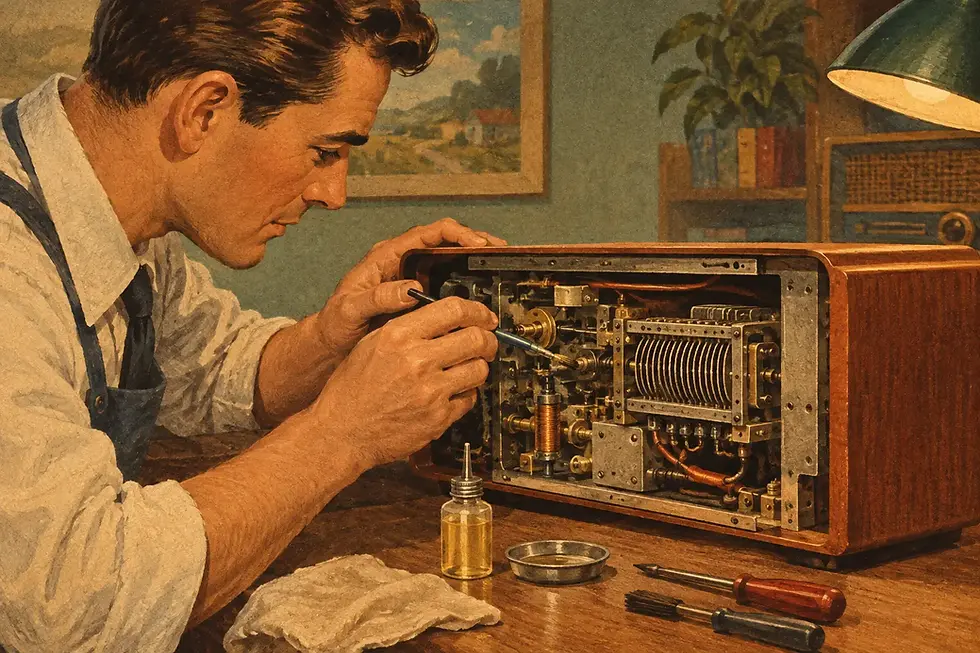
A careful repair process includes inspecting the power cord and plug, testing the power transformer where fitted, checking critical voltages, examining capacitors and resistors, cleaning contacts properly, and verifying performance after the set has warmed up. The goal is not merely to make the crackle disappear for an afternoon. It is to identify why it appeared and restore dependable operation.
Restoration Should Respect the Radio’s History
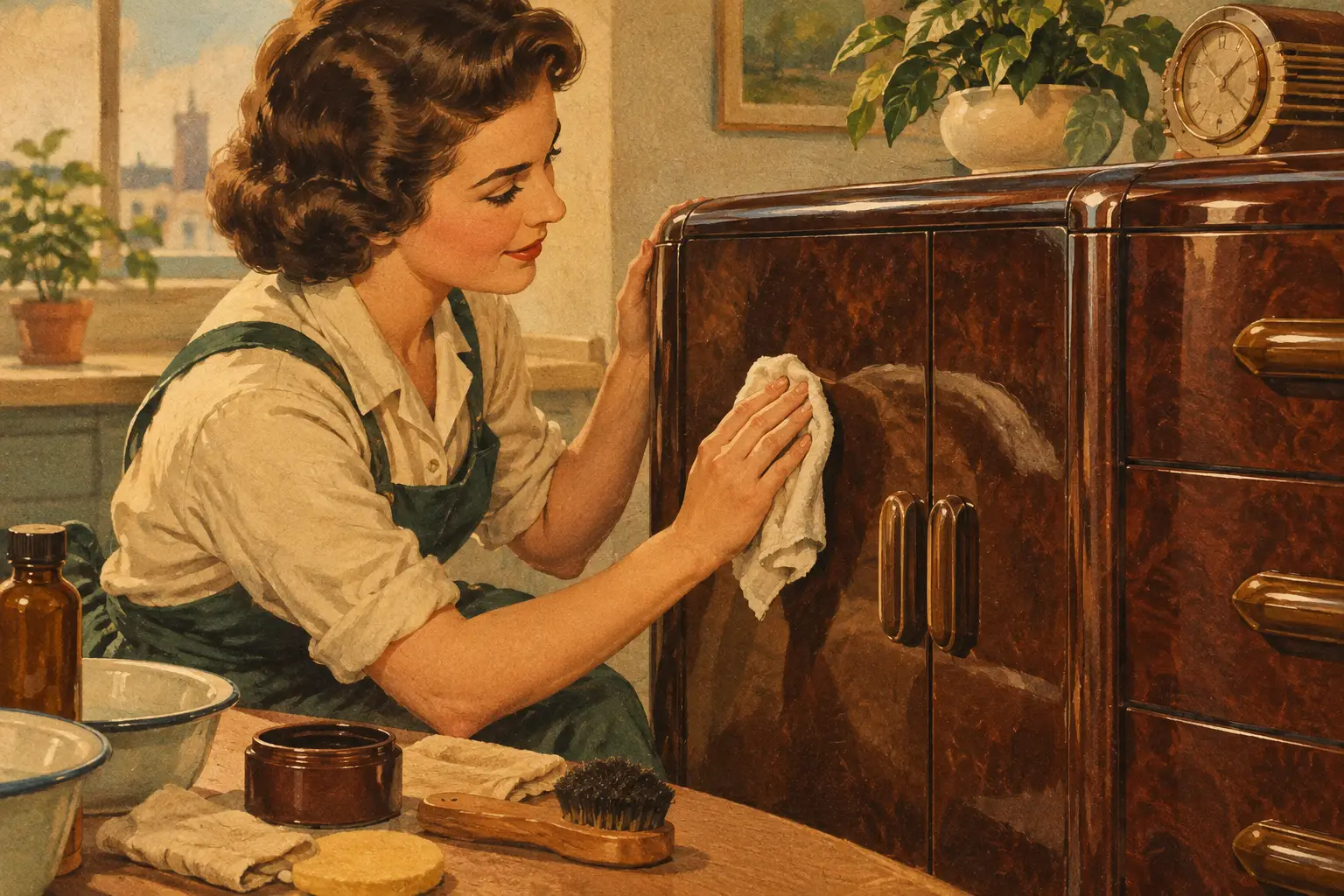
There is always a balance between originality and reliability. A collector-grade Art Deco radio, a Catalin set, or a cherished family console deserves thoughtful decisions about every visible and hidden alteration. At the same time, preserving deteriorated electrical parts solely because they are original can leave a radio unsafe and unusable.
The right approach depends on the model, rarity, condition, and owner’s goals. Some owners want an authentic display piece that plays occasionally. Others want their grandfather’s console ready for regular weekend listening. A specialist can help determine which components should be preserved, which should be replaced for safe operation, and how the work can remain sympathetic to the radio’s era.
At Regal Sound Design, that balance is central to antique radio restoration. A crackle is investigated as a technical clue, but the radio is handled as a surviving object with its own workmanship, finish, and story.
A Clear Voice Is Worth Preserving
An antique radio does not need to sound like a modern receiver to sound right. A little AM hiss between stations and the gentle character of an old speaker belong to the experience. Random crashes, loud pops, fading audio, and heat-related static do not.
If a long-silent tabletop set has begun to speak in fragments, resist the urge to keep turning it on in hopes that it will settle down. Set it aside, preserve its condition, and have the source of the noise evaluated. With careful attention, the same cabinet that has stood in a family home for generations can once again fill the room with the sounds it was built to carry.

Comments