


Shipping Antique Radios Safely Without Damage

A 1930s cathedral radio can survive eight decades in a living room and still be vulnerable to one hard drop in a delivery truck. Shipping antique radios safely means protecting more than a cabinet: the glass dial, fragile tube sockets, aging speaker cone, original knobs, and the history held inside all need thoughtful attention.
A good packing job begins before a single sheet of cushioning is used. Antique radios were not designed for modern parcel networks, and a method that works for a modern stereo receiver can damage a tube-era set. The right approach depends on the radio’s size, cabinet material, internal condition, and sentimental or collector value.
Start With a Careful Assessment
Photograph the radio from every side before packing it. Take close images of the dial, knobs, grille cloth, back panel, cabinet corners, chassis mounting screws, and any existing cracks or veneer loss. These photos create a useful record of its condition and help the recipient understand how it was packed.
Then inspect the cabinet and chassis together. Does the chassis feel secure, or does it shift when the radio is gently moved? Is the dial glass loose? Are there cracked knobs, a damaged speaker cone, or a brittle power cord? A radio with a loose chassis can turn its own cabinet into a hammer during transit. If anything moves that should not, address it before shipping.
Do not power up an untested antique radio just before it leaves. Old capacitors, insulation, and wiring can fail without warning. Shipping is a handling decision, not a reason to test an unknown electrical condition.
Shipping Antique Radios Safely Begins Inside the Cabinet
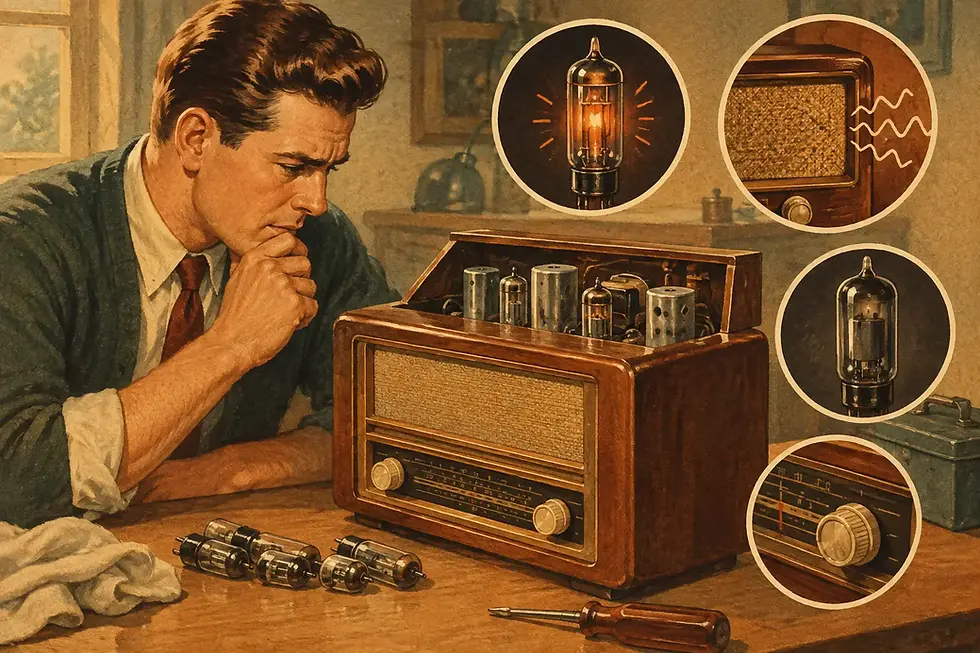
The interior deserves as much care as the exterior. Tubes are particularly vulnerable to impact, but removing them is not always the best choice. On a compact tabletop radio with accessible tubes, removing and individually wrapping them can reduce stress on the sockets and glass. Label each tube and its location before removal, using a simple diagram or numbered tags.
However, some tubes may be tightly fitted, shielded, or surrounded by fragile wiring. Forcing them out can create a problem that shipping never would have caused. If removal feels uncertain, leave them in place and provide cushioning that prevents the chassis from jolting. The goal is not to dismantle a radio unnecessarily. It is to stop dangerous movement.
If the chassis is loose, secure it using the proper mounting screws and original mounting points whenever possible. Never run a screw into an unfamiliar part of the cabinet or chassis. On radios with a heavy transformer, confirm that the chassis is supported correctly. That transformer can place considerable force on old mounting hardware when a package is dropped.
For a removable back panel, make sure it is fastened securely. If it is thin, warped, or cracked, protect it from pressure with a rigid layer of clean cardboard. Avoid placing tape directly on old finishes, paper labels, decals, or grille cloth.
Protect the Dial, Knobs, and Grille Cloth
The front of an antique radio is often the most difficult area to replace faithfully. Original dial glass, celluloid station scales, escutcheons, push buttons, and grille cloth can be more irreplaceable than many internal components.
Place a clean, soft barrier over the radio’s face before adding any padding. Acid-free tissue or unprinted packing paper is a good first layer. For a dial that sits proud of the cabinet, build a shallow protective frame around it from rigid cardboard or foam board so outside pressure is transferred to the cabinet structure instead of the glass.
Knobs should not be allowed to bear weight. If they are easily removable and you can document their exact positions, wrap and pack them separately in a labeled bag. If they remain installed, create enough clearance around the front panel that nothing presses against them. Do not tape packing material directly over a delicate dial face or original grille cloth.
Catalin, Plaskon, Bakelite, and lacquered wood require extra judgment. Bubble wrap can leave impressions or trap moisture against some aged surfaces, especially during hot or humid travel. Wrap the radio first in clean paper or a soft cotton layer, then add cushioning outside that barrier. Never assume a glossy plastic cabinet is as tough as it looks. A hairline crack can become a major break under concentrated pressure.
Use the Right Box System
For most tabletop, tombstone, cathedral, and small Art Deco radios, double-boxing is the safest parcel-shipping method. The inner box should hold the radio firmly with cushioning on every side. That inner box then sits inside a larger, sturdy outer box with additional cushioning between the two boxes.
Choose new, heavy-duty corrugated boxes rather than reused grocery-store cartons or boxes with softened corners. The outer box should allow at least two to three inches of protective material on every side of the inner box. More space is useful for a heavy radio, but only if that space is filled well enough to prevent movement.
Crumpled paper can work for light objects, but it compresses under weight and is not enough by itself for a transformer-equipped radio. Use dense foam, layered corrugated pads, molded inserts, or other firm cushioning around the inner package. The radio should not touch any wall of the box. Once sealed, gently tilt the package in several directions. If you can feel or hear movement, add support before shipping.
Do not rely on loose-fill peanuts for a heavy antique radio. They shift downward and leave unprotected areas around the cabinet. They can also work their way inside a chassis through ventilation openings, creating a frustrating cleanup for the recipient.
Match the Shipping Method to the Radio
A small wood tabletop radio and a floor-standing console should not travel the same way. Parcel service can be appropriate for a carefully packed compact set, especially when the radio’s cabinet is structurally sound and the chassis is secure. Larger radios, heavy communications receivers, and tube amplifiers may require oversized cartons, professional packing, or freight service.
Console radios deserve special caution. Their cabinets are tall, their veneers may be fragile, and their chassis and speaker assemblies can be surprisingly heavy. In many cases, local delivery, a specialized mover, or freight arranged with appropriate handling is safer than sending a console through a standard parcel network. The lowest shipping quote is not always the least expensive choice when a rare cabinet is at risk.
For especially valuable radios, consider whether removing the chassis for separate transport is appropriate. This can reduce stress on the cabinet, but it introduces its own risks and should be done only when the mounting arrangement is understood. A mismatched screw, strained dial cord, or damaged speaker lead can turn a sensible plan into an avoidable repair.
Seal, Label, and Insure With Care
Reinforce the outer carton using quality packing tape along all seams, including the bottom. A heavy radio can break through a poorly sealed base before it ever reaches the carrier’s counter. Add a duplicate address and contact information inside the package in case the exterior label is damaged.
Orientation arrows and “Fragile” markings can be helpful reminders, but they are not a substitute for packing that can withstand an incorrect orientation or a drop. Pack the radio as though the box may be stacked, tilted, and handled roughly. That is a realistic standard, not a pessimistic one.
Declare an appropriate value and keep your photographs, shipping receipt, and packing notes. Insurance can help with a financial loss, but it cannot restore original dial glass, a family inscription, or the exact patina earned over generations. Its purpose is protection after the fact, not permission to cut corners beforehand.
When Professional Packing Is Worth It
Professional packing is often worthwhile for rare Catalin radios, elaborate consoles, large tube amplifiers, radios with delicate marquetry, and pieces with strong family significance. A knowledgeable restoration shop can also identify hazards an ordinary pack-and-ship counter may miss, such as loose field-coil speakers, unsupported chassis weight, or brittle plastic trim.
At Regal Sound Design, antique electronics are treated as both working instruments and historical objects. That distinction matters when a radio is being sent for service. A package should arrive ready for careful restoration, not carrying new damage that obscures the radio’s original story.
Before sending any radio to a repair specialist, ask how they prefer to receive it. Some shops may request that tubes be removed, that a chassis be shipped separately, or that console cabinets travel by a different method. Following the receiving technician’s instructions can save time, expense, and unnecessary handling.
The final test is simple: imagine the package being turned upside down, set down firmly, and stacked beside other boxes. If the radio can move, if the dial can be pressed, or if the cabinet can meet a box wall, it needs more protection. Pack patiently, document carefully, and give that old radio the same consideration you would give it on its shelf at home. It has already carried its sound through enough years to deserve a safe next mile.


Comments