


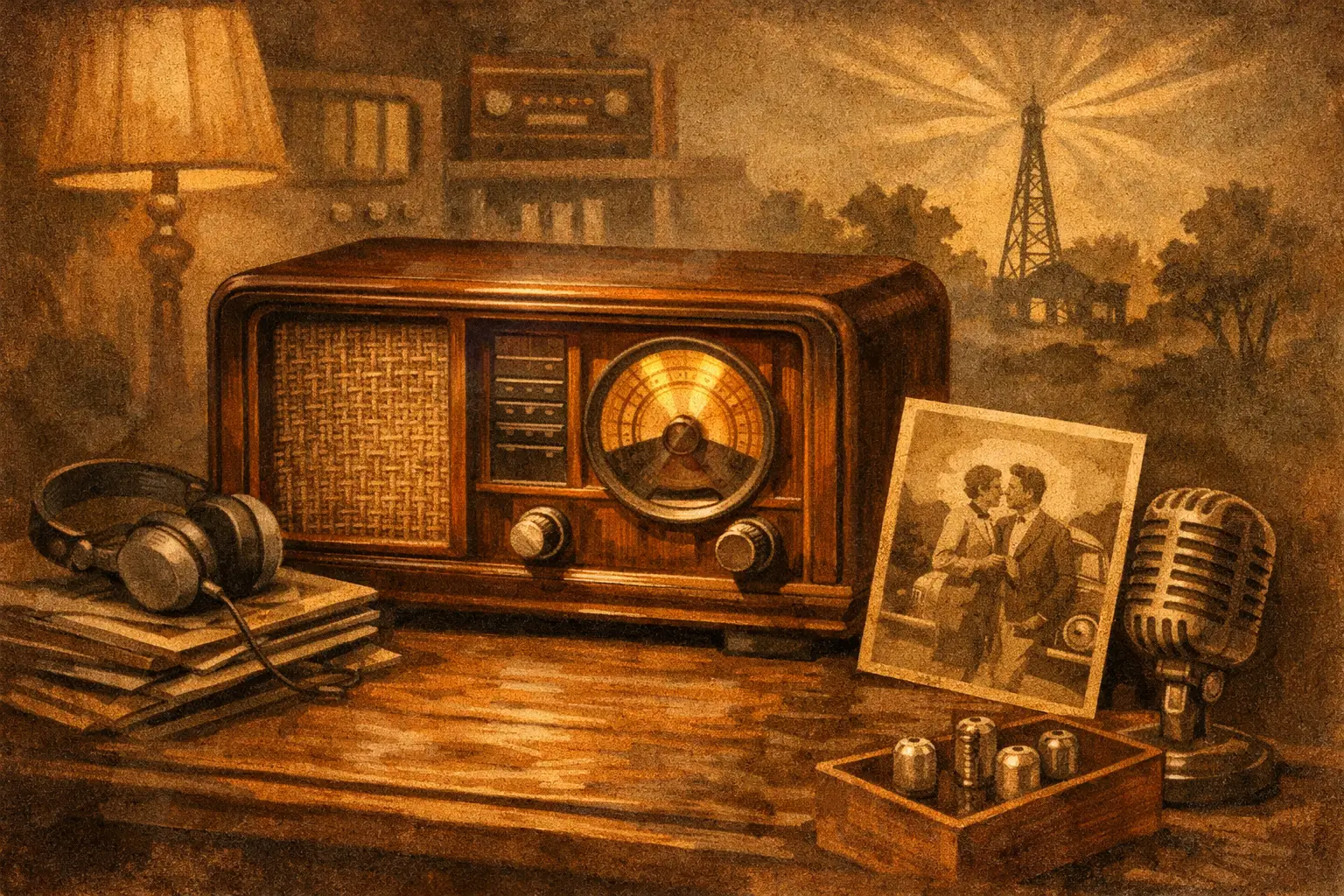
Antique Radios: Preserve the Sound and Story

A silent radio on a shelf can still hold a room full of history. Perhaps it belonged to a grandparent, sat in a childhood kitchen, or was found at an estate sale with its dial glass intact and its cabinet carrying the gentle marks of age. Antique radios were built to be heard, but they were also made to be lived with. Restoring one calls for respect for both its sound and its story.
A proper restoration is not the same as making an old set power on. Tube-era electronics can appear to work while hiding unsafe wiring, stressed components, or failures that may damage an irreplaceable speaker, power transformer, or cabinet. The goal is to return the radio to dependable operation while preserving the character that made it worth saving in the first place.
Why Antique Radios Need Specialized Care
Most antique radios were manufactured between the 1920s and the 1960s, a period that saw enormous changes in electronics, design, and home life. Early breadboard and battery sets, cathedral radios, tombstone models, grand console radios, postwar tabletop sets, and striking Art Deco designs all use different construction methods and components. A repair approach that makes sense for a 1950s AM table radio may be completely wrong for a 1920s battery receiver.
Inside, these sets often contain vacuum tubes, high-voltage power supplies, paper capacitors, electrolytic capacitors, aging resistors, cloth-covered wiring, delicate coils, and mechanical tuning assemblies. Even a modest tabletop radio can retain hazardous voltage after it has been unplugged. For that reason, turning on an untouched set "just to see if it works" is rarely a wise first step.
A radio that hums, fades, crackles, or receives only one strong station is telling you something about its condition. So is a set that appears dead. The cause may be as simple as a failed tube or a damaged cord, but diagnosis should not begin with assumptions. Each circuit needs to be evaluated on its own terms.
Restoration Is More Than Repair
Repair addresses a fault. Restoration considers the full experience of the piece: electrical safety, reliable performance, sound quality, cosmetic integrity, and historical authenticity. Those priorities sometimes overlap, and sometimes they require careful judgment.
For example, replacing deteriorated capacitors is usually essential for safe, stable operation. Yet the original cabinet finish, dial scale, grille cloth, knobs, and labels may be best preserved rather than replaced. A cabinet with a few honest scratches can retain far more character and value than one that has been aggressively stripped and refinished. The right choice depends on the radio, its rarity, its condition, and the owner’s goals.
The same is true of circuitry. A conscientious restorer replaces failed and unreliable components with suitable modern equivalents while avoiding needless alterations. Original parts that remain safe and functional may be retained. Modifications that cannot be reversed should be considered carefully, especially on rare or historically significant sets.
Electrical Work Comes First
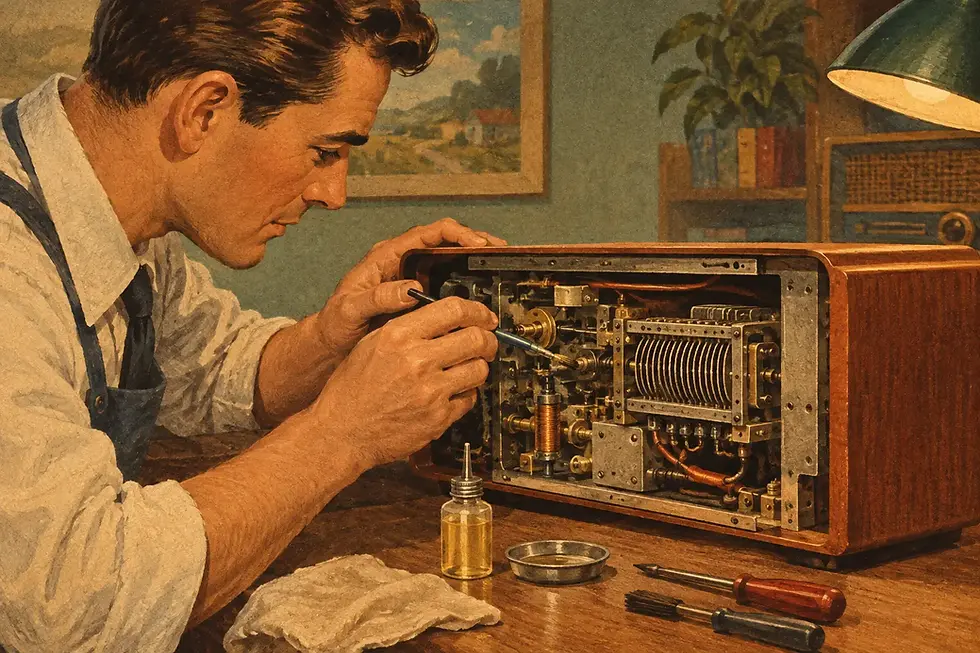
The electrical restoration process commonly begins with a close inspection. A specialist looks for damaged power cords, evidence of overheating, leaking capacitors, brittle insulation, corrosion, prior repairs, and missing or incorrect parts. Tubes are tested, but a tube test alone does not reveal whether the radio’s circuit is operating correctly.
Old capacitors deserve particular attention. Paper and electrolytic capacitors often deteriorate with age even when the radio has spent decades unused. A failing capacitor can produce hum, distortion, weak reception, or excessive current draw. In the worst cases, it can harm major components that are difficult or impossible to replace.
Once the radio is made electrically sound, alignment restores its ability to tune and receive stations properly. This is where the familiar experience returns: a dial that tracks accurately, clearer reception, reduced noise, and the warm, balanced voice of the original speaker and output stage. Alignment is not a decorative finishing step. It is central to how a restored radio performs.
The Cabinet Deserves Equal Respect
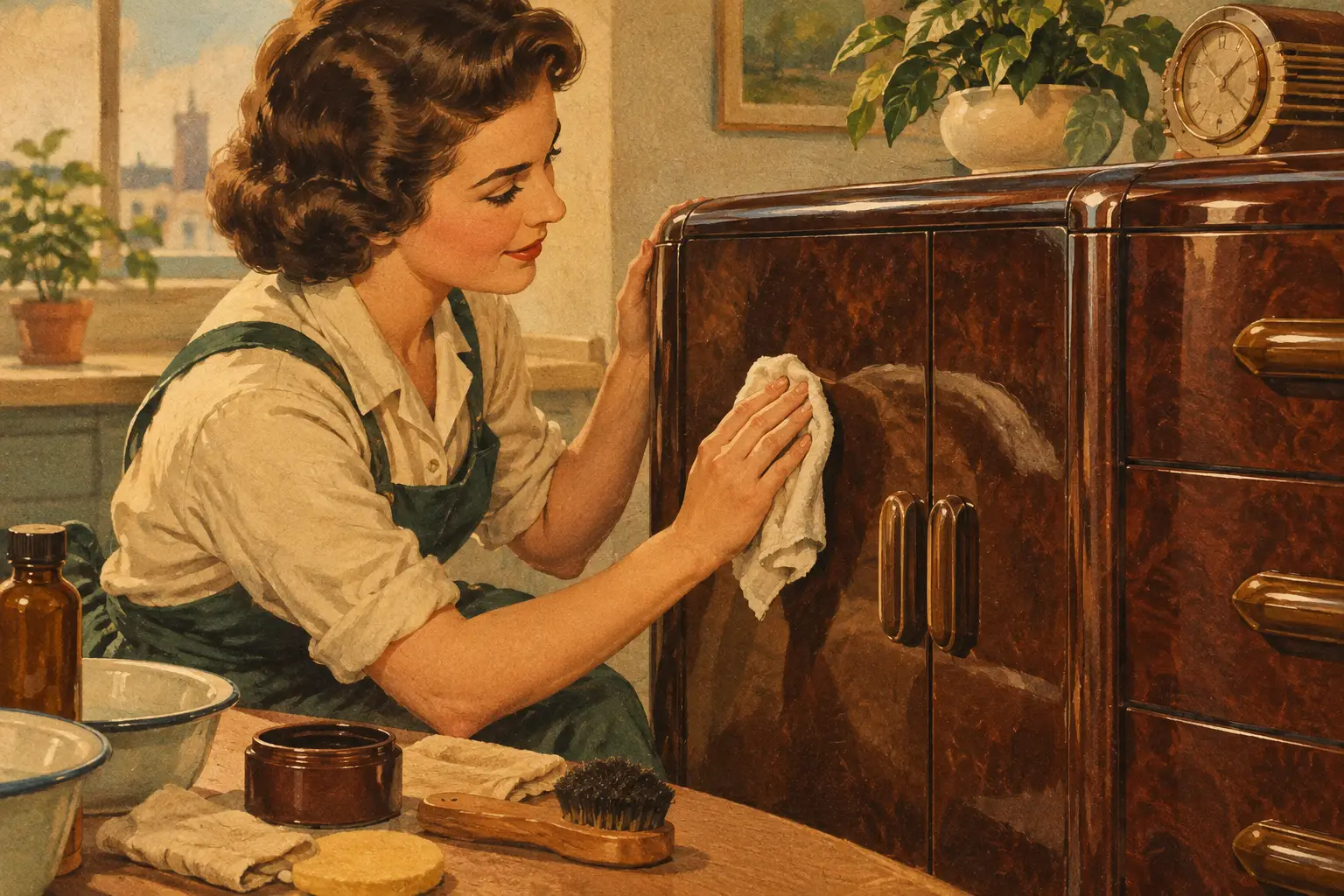
Wood veneer, Bakelite, Catalin, Plaskon, painted metal, and molded plastic all age differently. A cabinet can be structurally sound but dusty, dry, dulled, cracked, warped, or stained by decades of sunlight and storage. Cleaning must be appropriate to the material. What is safe for a lacquered wood cabinet may damage a painted surface or permanently cloud early plastic.
Catalin radios, in particular, require restraint. Their bright original colors often mellow or darken over time, and improper polishing can remove surface material or distort fine details. Likewise, original grille cloth may be fragile, but replacing it simply because it looks old can erase a valuable part of the radio’s identity.
A preservation-minded approach aims to stabilize, clean, and respectfully improve the cabinet without making it look newly manufactured. The patina of an old radio is not always a defect. Often, it is evidence of the life the object has already lived.
What to Do Before Bringing Home an Old Radio
If you inherit or purchase an antique radio, start gently. Do not plug it in until it has been inspected, especially if the power cord is cracked, the chassis is dusty or rusty, or the radio has been stored in an attic, basement, garage, or barn. Moisture, pests, and extreme temperature changes can all create problems that are not visible from the outside.
Keep loose knobs, back panels, labels, and hardware with the radio. These small details are easy to misplace and can be surprisingly difficult to find later. If there are notes, receipts, photographs, or a family story connected to the piece, preserve those as well. Provenance may matter to future collectors, but it also gives a family heirloom a richer place in its own history.
Avoid household cleaners, furniture polish, and improvised wiring repairs until you know what materials you are dealing with. A light dusting with a soft brush is generally safer than vigorous cleaning. Take clear photographs of the front, back, underside, dial, chassis, and any model labels before work begins. Good documentation helps guide careful restoration and preserves a record of the radio as it was found.
Choosing the Right Level of Restoration
Not every radio needs the same outcome. Some owners want a dependable daily listener. Others want to preserve a rare collector piece with minimal intervention. A large console may be restored as the centerpiece of a living room, while a small bedside radio may be repaired so its owner can once again hear the local AM band through a tube-powered speaker.
There are trade-offs. A radio kept entirely original may be more appealing as a display artifact, but it may not be safe to operate. A fully restored radio is more enjoyable to use, though selective replacement of aged electrical components is often necessary. Adding a discreet modern audio input can make sense for an owner who wants to enjoy music from another source, but it may not suit a collector seeking strict originality.
The best restoration starts with a conversation about how the radio will be used and what matters most to its owner. A skilled specialist should explain the condition of the set, identify the work required, and respect the difference between a cherished family radio and a museum-level collectible.
The Sound Is Part of the Artifact
Antique radios do not sound like modern audio equipment, and they should not be judged by the same expectation. Their appeal is not clinical perfection. It is the natural compression of a tube circuit, the resonance of an original cabinet, the glow of a dial, and the small ritual of slowly tuning across the band.
That experience can be especially moving with console radios and larger wooden cabinets. Their speakers and enclosures were designed as part of the furniture, producing a presence that is difficult to recreate with a modern portable device. Even a humble five-tube tabletop set can fill a room with a kind of warmth that feels immediate and familiar.
At Regal Sound Design, restoration work is approached as stewardship. Whether the piece is a cathedral radio, an Art Deco tabletop model, a family console, or a tube receiver, the purpose is not merely to make it function. It is to return a meaningful object to the role it was built to play.
When an old radio begins speaking again, it does more than receive a signal. It gives its owner a way to hear the past in the present, one carefully restored note, voice, and broadcast at a time.

Comments